
Metabolic models
Compounds studied against the signals the body uses to handle food and energy - appetite, the insulin response, and how fat is stored or used.
Science
Form Laboratories presents research compounds through identity, traceability, certificates, storage notes, and source-indexed literature context. All material is supplied for laboratory research use only - not for human or veterinary consumption.
Start here
A peptide is a short chain of amino acids. Amino acids are the building blocks proteins are made from - a protein might run to hundreds of them, while a peptide is usually somewhere between three and fifty. That length difference is what makes peptides worth studying: they are short enough to make synthetically in a lab, and specific enough to act as a signal.
Signalling is the job most of them do. Cells carry receptors - docking points shaped to accept one particular molecule. When a peptide fits its receptor, something switches on inside the cell. Different peptides fit different receptors, which is why one compound appears in metabolism papers and another in wound-repair papers. The peptide does not choose the subject; the receptor it fits does.
The research-focus labels on our catalogue are shorthand for which signals a compound is studied against.
Compounds studied against the signals the body uses to handle food and energy - appetite, the insulin response, and how fat is stored or used.
Compounds studied against brain and nerve signalling - the chemical messengers nerve cells use to talk to each other, and the growth signals that keep them connected.
Compounds studied against repair signals - how cells are recruited to a site of damage, and how fresh blood supply reaches it.
Compounds studied against the chemistry happening inside a single cell - how it produces energy, and how it maintains and repairs itself.
Compounds studied against signals found in skin-tissue models, such as those involved in collagen and structural repair.
Every compound in the catalogue is grouped by the research areas above, and each product page links to a research guide setting out the published literature in detail. This page answers the companion question: how we check and record what is actually in the vial. The science tells you what is being studied; the documentation below tells you that the material you receive is the compound the label says it is, at the purity the lab measured.
Documentation system
01
Every catalogue record shows the compound name, sequence or format, amount per vial, storage note, and lot reference before you order - not after. Identity is confirmed against a reference standard using a method such as HPLC or mass spectrometry, and that method is named on the matching lot's certificate, so you can see how identity was established rather than take it on faith.
02
A Certificate of Analysis (COA) is the lab's own record for one specific lot: the purity result, the identity-confirmation method used, the physical appearance the lab observed, and whether that lot was released for supply. Page copy can describe the documentation model in general, but it never substitutes for the certificate - the COA for your batch is always the authoritative record.
03
Every vial label carries a printed lot number, and that number is what ties the physical vial back to its Certificate of Analysis. Order records, packing notes, and account records are all organised around that lot number, so if you ever have a documentation question, support can locate the exact paperwork for the exact vial you received - not just the product in general.
04
Everything we publish - product pages, research guides, and this page - is written in laboratory and literature language: identity, sequence, purity, storage, and source-indexed citations. None of it is medical advice, dosing guidance, or a recommendation for personal, human, or veterinary use, and every material is supplied strictly for laboratory research.
Certificate of Analysis
Public pages can describe the documentation model, but the current lot record remains authoritative for identity, purity, appearance, storage, and release state. Published literature does not replace the COA.
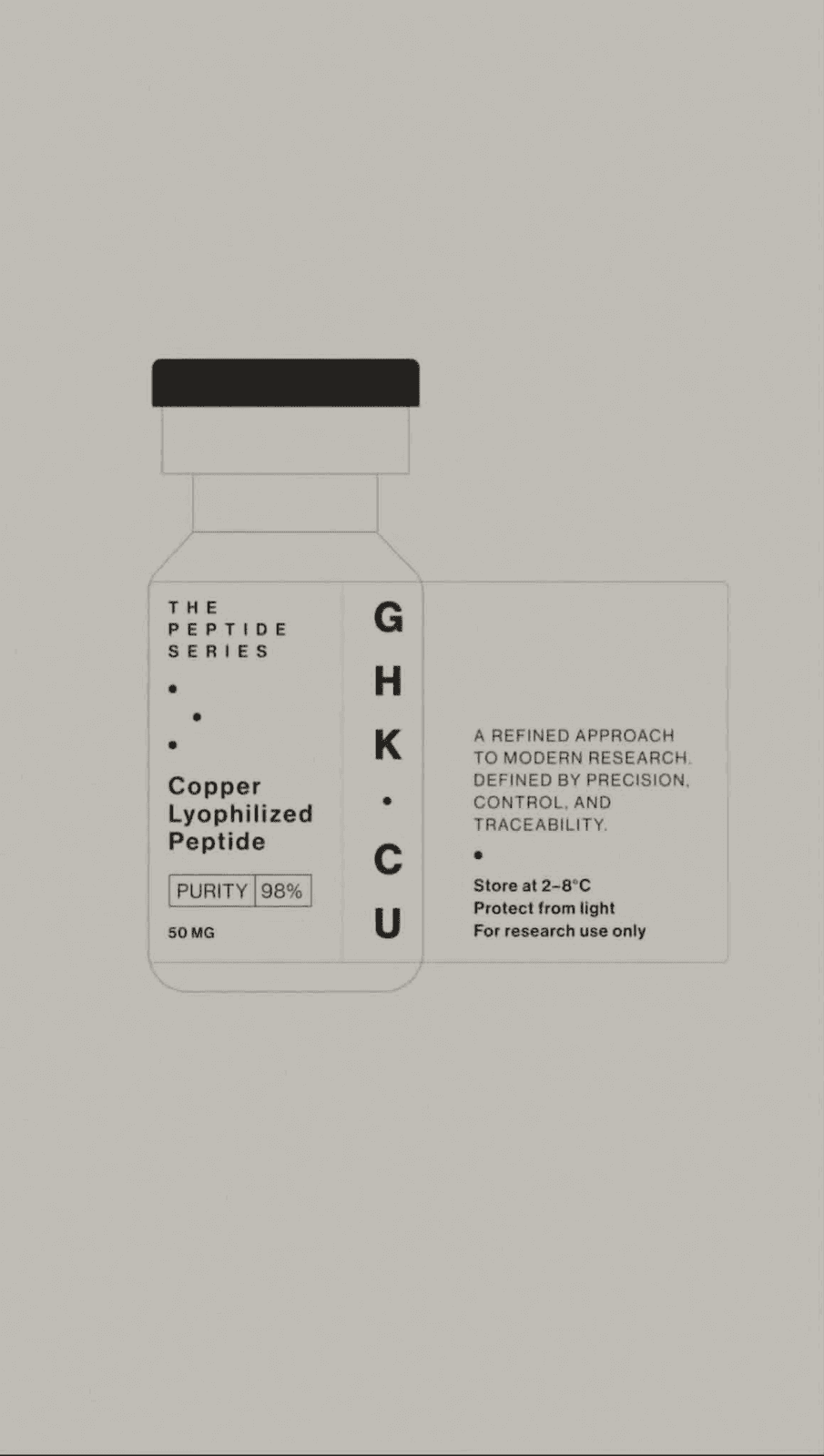
Freeze-dried (lyophilised) reference material is generally more stable than material in solution, but it still degrades faster when left warm, humid, or exposed to light for extended periods. The storage note - refrigerated at 2-8 C, protected from light - is printed on the vial label and repeated on the matching COA, so it stays with the material from dispatch through to laboratory receipt.
Some peptide sequences are more light-sensitive than others, which is why packaging and labels carry light-protection language wherever it applies to the supplied material. Keeping a vial out of direct light alongside its refrigerated storage is standard practice for preserving a batch until it's used.
When you contact support about storage or a documentation question, the lookup starts with three things: the printed lot number on the vial label, the order reference, and the account email. With those, support can pull the exact COA and storage note on file for that batch, rather than a generic answer for the product line.
Handling notes describe storage and record-keeping only - refrigeration, light protection, and keeping the label with its COA. They deliberately stop short of reconstitution, preparation, or administration guidance, because those decisions sit with the receiving lab and its own written protocols, not with us.
Common questions
Research guides
A source-indexed literature record with identity, pathway labels, and COA caveats kept separate.
Open guideA research guide organized around sequence identity, model-system literature, and supplied-form limits.
Open guideA guide to copper-complex identity, registry conventions, and literature context without product-effect claims.
Open guideA source-indexed guide to sequence identity, preclinical literature context, and RUO handling limits.
Open guidePerth researchers reviewing documentation can explore the catalogue — every order is dispatched from Perth via Australia Post or CouriersPlease in plain packaging with tracking.
Research-use-only boundary
Science pages are written for laboratory record review. They do not provide medical advice, clinical guidance, or directions for personal use.