
Average body-weight change in the highest-dose group after 48 weeks in the Phase 2 obesity trial. A trial result, not a product claim.
Phase 2 trial - New England Journal of Medicine, 2023Plain-English research guideLY3437943
Retatrutide research guide
Everything worth knowing, without the jargon.
Retatrutide (research code LY3437943) is an investigational lab-made peptide - a short chain of amino acids - developed by Eli Lilly and now in Phase 3 human trials. It's studied for acting on three receptor systems at once.
REV 2026-07 · 7 Aug 20266 peer-reviewed studiesResearch-use-only context
What the papers reportThird-party literature - not product claims
Average drop in liver fat in the highest-dose group after 24 weeks in a smaller fatty-liver sub-study, measured against each person's starting level. A trial result in one dose group, not a product claim.
Nature Medicine, 2024Receptor systems the peptide acts on in the studies: GLP-1 (fullness), GIP (meal response), and glucagon (energy use and liver).
Triple agonistHow much lower HbA1c (a three-month blood-sugar marker) ran in the higher-dose groups of the Phase 2 diabetes trial.
Phase 2 trial - Lancet, 2023Why it matters
Three pathways, not one.
Researchers study appetite and energy balance by looking at the body's hormone signalling systems. Earlier metabolic peptides focused on GLP-1 (the fullness pathway); the next generation added GIP (the meal-response pathway).
Retatrutide goes a step further and adds glucagon - a third pathway the research links to how the body burns energy and to liver fat. Whether combining all three does more than one or two is the question the trials are testing. These are study questions, not product claims.
How it works
One molecule, three pathways.
A plain-English look at each pathway, kept at a summary level.
Appetite & fullness
GLP-1 (glucagon-like peptide-1) is the pathway researchers link to feeling full and to the stomach emptying more slowly. It's the pathway semaglutide (Ozempic) acts on.
Insulin & nutrients
GIP (glucose-dependent insulinotropic polypeptide) is involved in the insulin response and in how the body handles nutrients after a meal. Tirzepatide (Mounjaro) adds it alongside GLP-1.
Energy & liver fat
Glucagon is the third pathway, and the one that sets Retatrutide apart. The research connects it to energy use and to how much fat sits in the liver.
Pharmacology at a glance
- Research code
- LY3437943
- Class
- Triple agonist - one molecule designed to switch on three receptor systems at once: GIP, GLP-1, and glucagon.
- Molecule
- A long-acting lab-made peptide (a short amino-acid chain) built to stay active in the body for longer.
- Route studied
- In the human trials it was given as a once-weekly injection under the skin, under clinician supervision. That's the trial record, not use guidance.
- Reported half-life
- About 6 days in the Phase 1 study - the time for the amount in the blood to fall by half.
- Originator
- Developed by Eli Lilly
- Approval status
- Still investigational - Phase 3 trials are underway before any regulator decides on approval
What it has been studied for
Study areas from the published literature.
Body weight / obesity
Body-weight change in adults with obesity and no diabetes - the trial behind the -24.2% figure.
Phase 2 trial - New England Journal of Medicine, 2023Type 2 diabetes
Blood-sugar control (HbA1c) and body weight, compared against a placebo and an approved diabetes medicine.
Phase 2 trial - Lancet, 2023Liver fat (fatty-liver disease)
Liver fat measured by MRI in people with fatty-liver disease - the trial behind the -82.4% figure.
Nature Medicine, 2024Fat vs lean mass
Imaging over 36 weeks to work out how much of the weight change was fat rather than lean tissue.
Lancet Diabetes & Endocrinology, 2025Heart & blood markers
Blood pressure and blood-fat readings, tracked as extra measurements across the Phase 2 trials.
Phase 2 trials - secondary measuresPhase 3 results (pending)
TRIUMPH and TRANSCEND are the large Phase 3 programmes asking the longer-term safety and outcome questions. Results aren't out yet.
TRIUMPH / TRANSCENDThe studies
The evidence, study by study.
Open any study for a plain summary, what it measured, the finding, and a link to the paper.
This was the first proof that one peptide could switch on all three receptor systems. The team tested it in lab cells and in rodents, and tracked body weight, blood sugar, and liver fat.
- Studied in
- Lab cell tests plus rodents (rats and mice).
- Design
- A proof-of-concept study - an early check that the idea works at all.
- Measured
- How strongly the molecule bound each receptor, plus body weight and blood sugar in the animals.
The team described LY3437943 as one peptide active at all three receptors - glucagon, GLP-1, and (most strongly) GIP. In the rodents, higher doses went with lower body weight and blood sugar, and the glucagon pathway went with less liver fat.
DOI 10.1016/j.cmet.2022.07.013The first human study focused on safety and on how the body handled the molecule, with some early body-weight and blood-sugar readings along the way.
- Studied in
- Adults with type 2 diabetes.
- Design
- Randomised, double-blind, placebo-controlled - people were assigned by chance, neither side knew who got what, and one group got an inactive look-alike.
- Measured
- Safety, how the body absorbed and cleared the molecule, and early body-weight and blood-sugar readings.
The study reported how well participants tolerated it and how the body absorbed and cleared it. It also measured a half-life of about 6 days - long enough to support once-weekly dosing - which shaped how the later trials were designed.
DOI 10.1016/S0140-6736(22)02033-5Over 48 weeks, average body weight fell by 24.2% in the highest-dose group, versus 2.1% on placebo (the inactive look-alike).
- Studied in
- 338 adults with obesity and no diabetes.
- Design
- A 48-week randomised, double-blind, placebo-controlled trial.
- Measured
- Percent body-weight change at 24 and 48 weeks.
Body weight dropped by an average of 24.2% at 48 weeks in the highest-dose group, versus 2.1% on placebo. Nausea and other stomach and bowel effects were the most common side effects and were mostly mild to moderate; heart rate rose more in the higher-dose groups, peaked around week 24, then eased off.
DOI 10.1056/NEJMoa2301972This trial compared Retatrutide against both a placebo and an approved diabetes medicine, tracking blood sugar (HbA1c) and body weight.
- Studied in
- 281 adults with type 2 diabetes.
- Design
- A 36-week trial with a placebo group and an active comparator (an approved medicine used as a benchmark).
- Measured
- HbA1c (a three-month blood-sugar marker) and body-weight change.
In the higher-dose groups, HbA1c fell by roughly two percentage points, alongside meaningful body-weight change. Side effects looked consistent with other gut-hormone medicines in the GLP-1 and GIP class.
DOI 10.1016/S0140-6736(23)01053-XIn a smaller group with fatty-liver disease, average liver fat fell by 82.4% at 24 weeks, and 86% of the highest-dose group reached a normal liver-fat level.
- Studied in
- 98 adults whose liver fat was at least 10% at the start.
- Design
- An imaging sub-study using MRI scans at 24 weeks.
- Measured
- Liver-fat change, as a percentage of each person's starting level.
In people with fatty-liver disease (MASLD - metabolic dysfunction-associated steatotic liver disease), average liver fat fell by 82.4% at 24 weeks in the highest-dose group. A normal level - under 5% - was reached by 86% of that group, versus none on placebo.
DOI 10.1038/s41591-024-03018-2This sub-study used body-composition imaging to work out how much of the weight change was fat rather than lean tissue.
- Studied in
- Adults with type 2 diabetes.
- Design
- An imaging sub-study using body-composition scans up to week 36.
- Measured
- Total fat mass, compared with placebo and an approved medicine.
Total body-fat mass came down more than with placebo or the approved comparison medicine, which helped show that most of the weight change was fat rather than lean tissue.
DOI 10.1016/S2213-8587(25)00092-0Compare
Placed beside familiar research names.
This table describes literature and approval status only.
| Semaglutide (Ozempic / Wegovy) | Tirzepatide (Mounjaro / Zepbound) | Retatrutide (LY3437943) | |
|---|---|---|---|
| GLP-1 (fullness pathway) | Yes | Yes | Yes |
| GIP (meal & insulin-response pathway) | - | Yes | Yes |
| Glucagon (energy & liver pathway) | - | - | Yes |
| Receptor systems acted on | 1 | 2 | 3 |
| Approval status | Approved medicine | Approved medicine | Investigational - in Phase 3 trials |
Comparison is for context from published records. It is not product-use guidance.
Study amount groups
What the published trial records listed.
| Trial | Study amount groups | Recorded schedule |
|---|---|---|
| Phase 1 (first human safety study) | Single and repeated doses | Weekly under-the-skin injection (trial record only) |
| Phase 2 (obesity trial) | 1, 4, 8, and 12 mg groups | The trial doctors escalated the amount over the study. Not an instruction. |
| Phase 2 (type 2 diabetes trial) | 0.5, 4, 8, and 12 mg groups | The trial doctors escalated the amount over the study. Not an instruction. |
These are the dose groups the trial doctors chose, listed here purely as research context. They are not instructions. Form Labs supplies Retatrutide as laboratory reference material and gives no dosing, preparation, or human-use guidance.
Risks recorded in studies
The side effects the trials reported.
Stomach & bowel effects
Most commonNausea, vomiting, diarrhoea and constipation were the most common side effects in the trials. They showed up more in the higher-dose groups, were mostly mild to moderate, eased over time, and were the main reason some people left the studies.
Faster heart rate
More in higher-dose groupsAverage heart rate rose more in the higher-dose groups, peaked around week 24, then came back down. It was watched throughout, but what it means for long-term heart health isn't established yet.
Reduced appetite
Reported in trialsLower appetite and feeling full sooner were reported as part of how the molecule works. Nutrition was monitored because food intake could drop a lot.
Injection-site reactions
UncommonMild reactions where the injection was given were reported occasionally. That's the trial record, not use guidance.
Cautions for the wider drug class
Class-levelApproved GLP-1 medicines carry label warnings about pancreas inflammation, gallbladder problems, thyroid tumours seen in rodent studies, and low blood sugar when combined with insulin or sulfonylureas (a diabetes drug group). Whether each of these applies to Retatrutide specifically is one of the things Phase 3 is meant to confirm.
Serious & unknown risks
Not establishedThe Phase 2 trials didn't turn up an unexpected serious safety signal, but they were short. Long-term safety, heart-and-blood-vessel outcomes, rare events, and what happens after stopping are still unknown - these are the questions Phase 3 is built to answer.
This section summarizes third-party trial records. It is not a complete safety profile or advice.
Where evidence stops
Groups and questions not established.
- Pregnancy & breastfeeding: not studied - these groups were left out of the trials.
- Children & under-18s: the trials enrolled adults only.
- Type 1 diabetes: not tested; the trials focused on obesity and type 2 diabetes.
- Long-term use: whether the changes last, and what safety looks like beyond the trial windows, is unknown.
- Heart & blood-vessel outcomes: dedicated data is still pending from the Phase 3 trials.
- After stopping: how much weight comes back after stopping isn't well described yet.
Development and status
Where the research record sits.
Discovery plus the first-in-human study: early lab and animal work, then the Phase 1 safety study.
Phase 2 trials in obesity and type 2 diabetes reported the body-weight and blood-sugar results.
The liver-fat sub-study published its MRI imaging data in fatty-liver disease.
The body-composition sub-study used imaging to separate fat from lean tissue in the weight change.
The Phase 3 programmes, TRIUMPH and TRANSCEND, are underway. Results are still pending.
Approval status: Still investigational - Phase 3 trials are underway before any regulator decides on approval.Whatever the molecule’s status elsewhere, what Form Labs supplies is research-use-only reference material - for laboratory work, not for people or animals.
Evidence and limitations
What this means, and what it does not.
The Phase 2 results are striking
Across several trials, body weight, blood sugar and liver fat improved more in the higher-dose groups, and the pattern was consistent. That's a summary of the research - not a product result or a promise.
Follow-up is still short
Long-term safety, heart-and-blood-vessel outcomes, and what happens after stopping aren't established. The Phase 3 trials, TRIUMPH and TRANSCEND, are underway and not yet published.
There were side effects
Stomach and bowel effects were the most common and hit the higher-dose groups harder. Heart rate also rose more in those groups, peaked around week 24, then eased off.
The maker ran the trials
Every trial here was funded by Eli Lilly, the company developing the drug. That's normal at this stage, but it's exactly why independent Phase 3 confirmation matters.
Where Form Labs fits
This guide is a plain-English summary of published research that Form Labs did not run. It's not medical advice, not a product claim, and not use guidance. Form Labs supplies Retatrutide strictly as reference material, with a batch number you can match to its lab report, for laboratory research.
Lab handling
Reference-material handling context.
Research-use boundary
Retatrutide is supplied strictly for laboratory research. It is not for human consumption, veterinary, medical, or cosmetic use, and no directions for use are given.
Storage
Supplied freeze-dried. Keep it at 2-8 C (fridge-cold) and out of light, following the vial label, the matching lab report for the batch, and the receiving lab's own written procedures.
Reconstitution
Reconstitution means mixing the dry powder back into liquid for handling. This guide doesn't set a method - that's down to the receiving lab's written protocol and the batch paperwork.
Stability
How long a freeze-dried peptide stays within spec depends on how it's stored, and is tracked through the batch paperwork. Any working window after it's been mixed belongs in the lab's own protocol, not this guide.
Perth dispatch
Available to Perth researchers as RUO reference material with lot-matched paperwork, dispatched from Perth via Australia Post or CouriersPlease. For laboratory research use only.
Glossary
Plain-English definitions.
- Agonist
- A molecule that switches a receptor on.
- Triple agonist
- One molecule that switches on three different receptor systems at once.
- GLP-1
- A gut-hormone pathway tied to feeling full and to the stomach emptying more slowly.
- GIP
- A pathway involved in the insulin response and in handling nutrients after a meal.
- Glucagon receptor
- A pathway linked to how the body uses energy and to liver fat.
- Incretin
- The gut-hormone family (including GLP-1 and GIP) studied for insulin and appetite signals.
- HbA1c
- A blood marker of average blood sugar over about three months, used to track diabetes.
- MASLD
- Metabolic dysfunction-associated steatotic liver disease - excess fat in the liver linked to metabolic health.
- MRI-PDFF
- An MRI measurement of how much of the liver is fat.
- Pharmacokinetics
- How the body absorbs, moves around, and clears a compound - including half-life.
- Dose step-up
- Starting on a lower dose and raising it gradually - common in these trials.
- RCT
- Randomised controlled trial - people are assigned by chance and compared with another group, often a placebo.
- Adverse event
- Any unwanted medical event during a trial, whether or not it was caused by the compound.
- Investigational
- Still in research - not approved by regulators for use.
FAQ
Questions answered plainly.
An investigational lab-made peptide (research code LY3437943) from Eli Lilly, now in Phase 3 trials. Published studies describe one molecule that acts on three receptor systems - GLP-1, GIP and glucagon - with body weight, blood sugar and liver fat tracked as trial results.
An agonist is a molecule that switches a receptor on. A triple agonist switches on three at once. Retatrutide acts on GLP-1, GIP and glucagon in a single peptide, where earlier compounds act on only one or two.
Semaglutide (Ozempic/Wegovy) acts on GLP-1; tirzepatide (Mounjaro/Zepbound) acts on GLP-1 and GIP. Retatrutide adds a third pathway, glucagon, which the research links to energy use and liver fat. The first two are approved medicines; Retatrutide is still investigational.
No. It's investigational and not approved by the TGA (Australia's medicines regulator), the US FDA, the European EMA, or any other regulator, for any use. It appears here only as a research subject in the published literature.
The Phase 2 results are large and consistent, but follow-up is short. Long-term safety, heart-and-blood-vessel outcomes, and how long the changes last after stopping aren't established. The Phase 3 trials are underway and unpublished, and every trial so far was funded by the maker.
Form Labs supplies peptides strictly as laboratory research materials. This guide is a plain-English summary of published research that Form Labs did not run - not medical advice, not a product claim, and not guidance for any human or veterinary use.
References
Every figure, sourced.
Educational references to third-party literature. Form Labs is unaffiliated with the study authors.
Early lab and animal study of LY3437943 acting on the GIP, GLP-1 and glucagon receptors. Coskun T, Urva S, Roell WC, et al. Cell Metabolism, 2022; 34(9): 1234-1247.
DOIFirst-in-human safety study of LY3437943, including how the body absorbs and clears it. Urva S, Coskun T, Loh MT, et al. The Lancet, 2022; 400: 1869-1881.
DOIPhase 2 trial reporting body-weight results in adults with obesity and no diabetes. Jastreboff AM, Kaplan LM, Frias JP, et al. New England Journal of Medicine, 2023; 389(6): 514-526.
DOIPhase 2 trial reporting blood-sugar and body-weight results in adults with type 2 diabetes. Rosenstock J, Frias J, Jastreboff AM, et al. The Lancet, 2023; 402: 529-544.
DOISub-study reporting liver-fat results in fatty-liver disease (MASLD). Sanyal AJ, Kaplan LM, Frias JP, et al. Nature Medicine, 2024; 30: 2037-2048.
DOIImaging sub-study describing fat mass versus lean mass within the weight change. Coskun T, Wu Q, Schloot NC, et al. Lancet Diabetes & Endocrinology, 2025.
DOICitations are provided for education only. No therapeutic, weight-loss, or efficacy claims are made.
How we produce these guides
- Who writes them
- These guides are written and maintained in-house by the Form Laboratories research team. They are not authored by a named clinician, and nothing in them is medical advice. Where a guide is short, that is because the published research is thin - we would rather say so than fill the space.
- What they are built from
- Each guide summarises published, peer-reviewed literature. Every study we describe is listed in full at the bottom of the page with a link to the original paper, so you can open it and check what it actually says. Form Laboratories did not run any of the cited studies.
- What they deliberately leave out
- These guides describe how the biology works and what the published research measured. They do not contain dosing, preparation, reconstitution or administration instructions, and they make no claim about what any compound would do for a person. Everything we supply is research-use-only reference material.
- How we handle uncertainty
- Where the evidence is limited to cell cultures or animals, we say so in the study entry rather than implying a human result. Where a compound has no completed human trial, the guide states that plainly.
The product
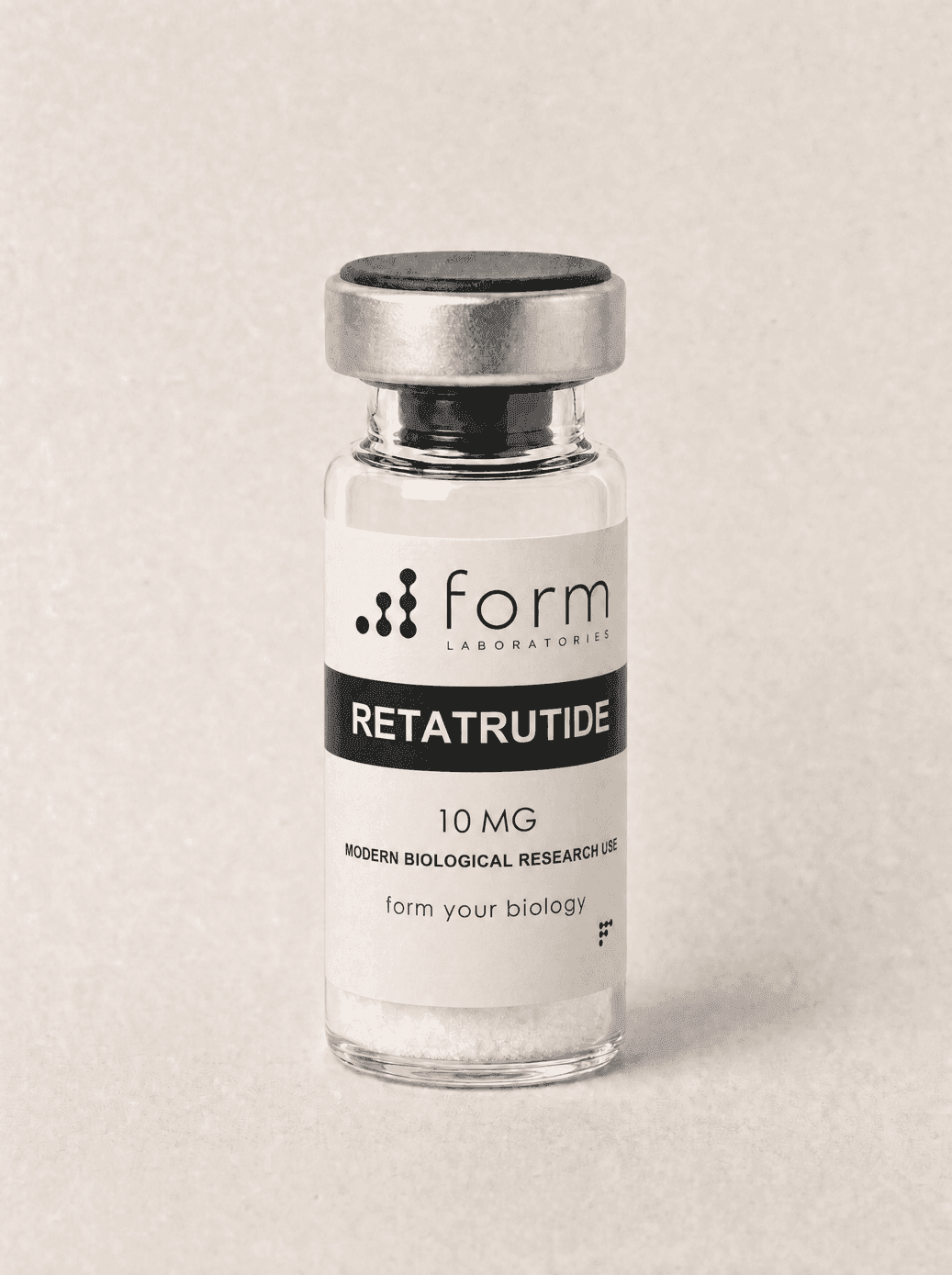
Form Laboratories - RTA
Ready to see RTA?
- Independently tested - purity printed on the lab report.
- A batch number on every vial, matched to its report.
- Ships from Perth via Australia Post or CouriersPlease in plain packaging.
From
$149.00 AUD
10 mg / 20 mg / 30 mg - 2-8 C
Reference material for laboratory research only.
Build your stack
Compare nearby catalogue records.
These nearby records stay inside the research-only catalogue.
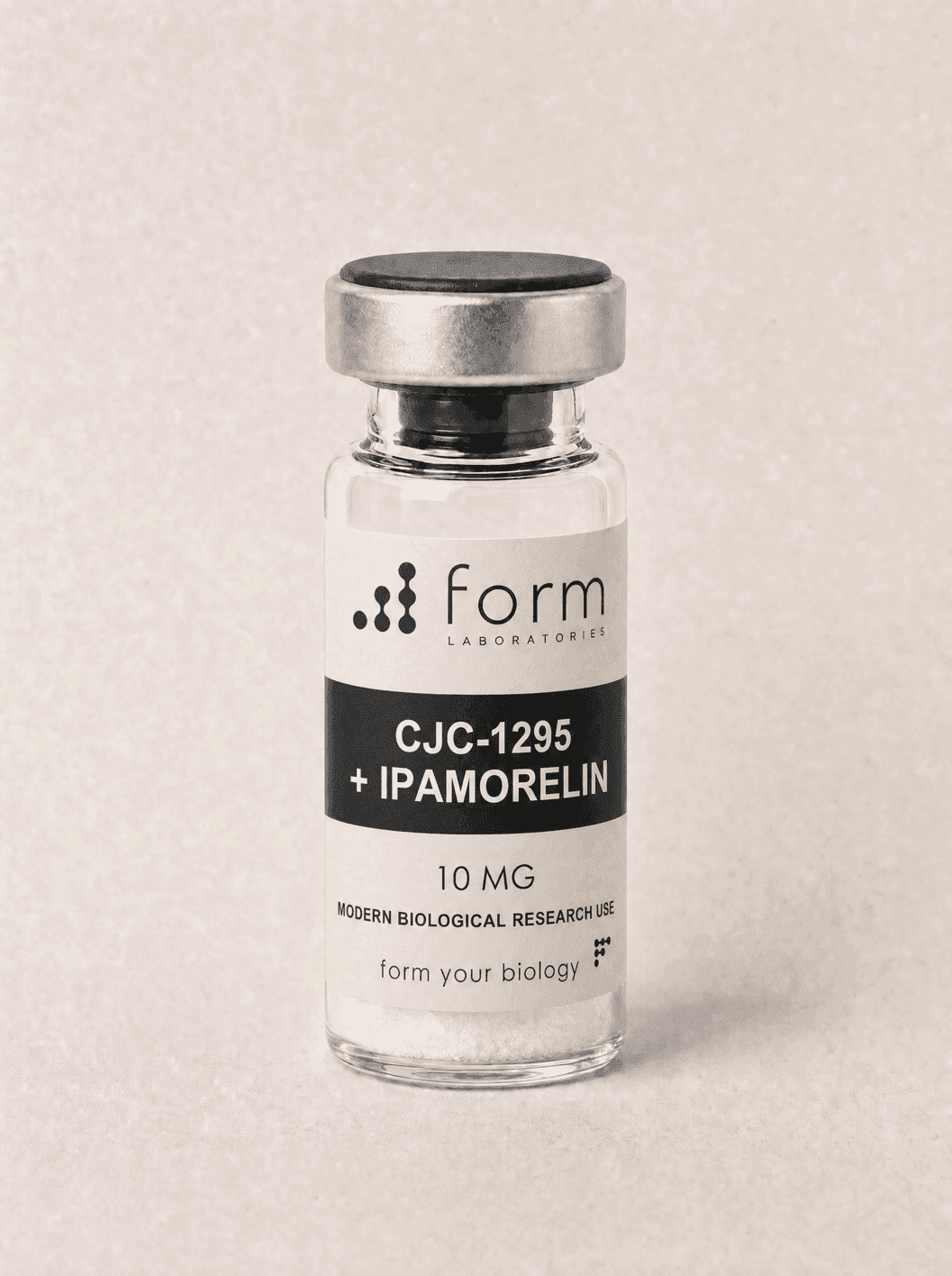
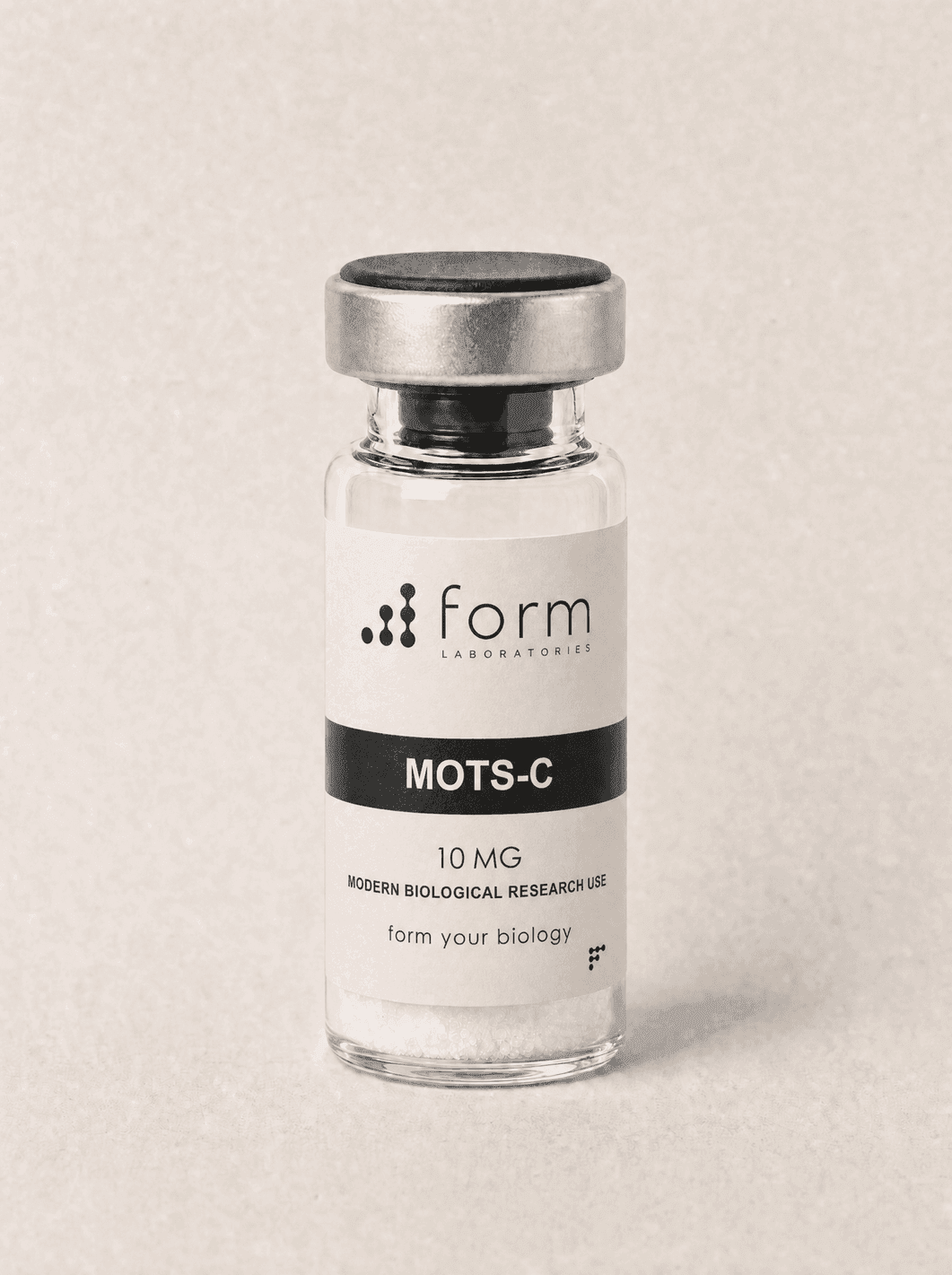
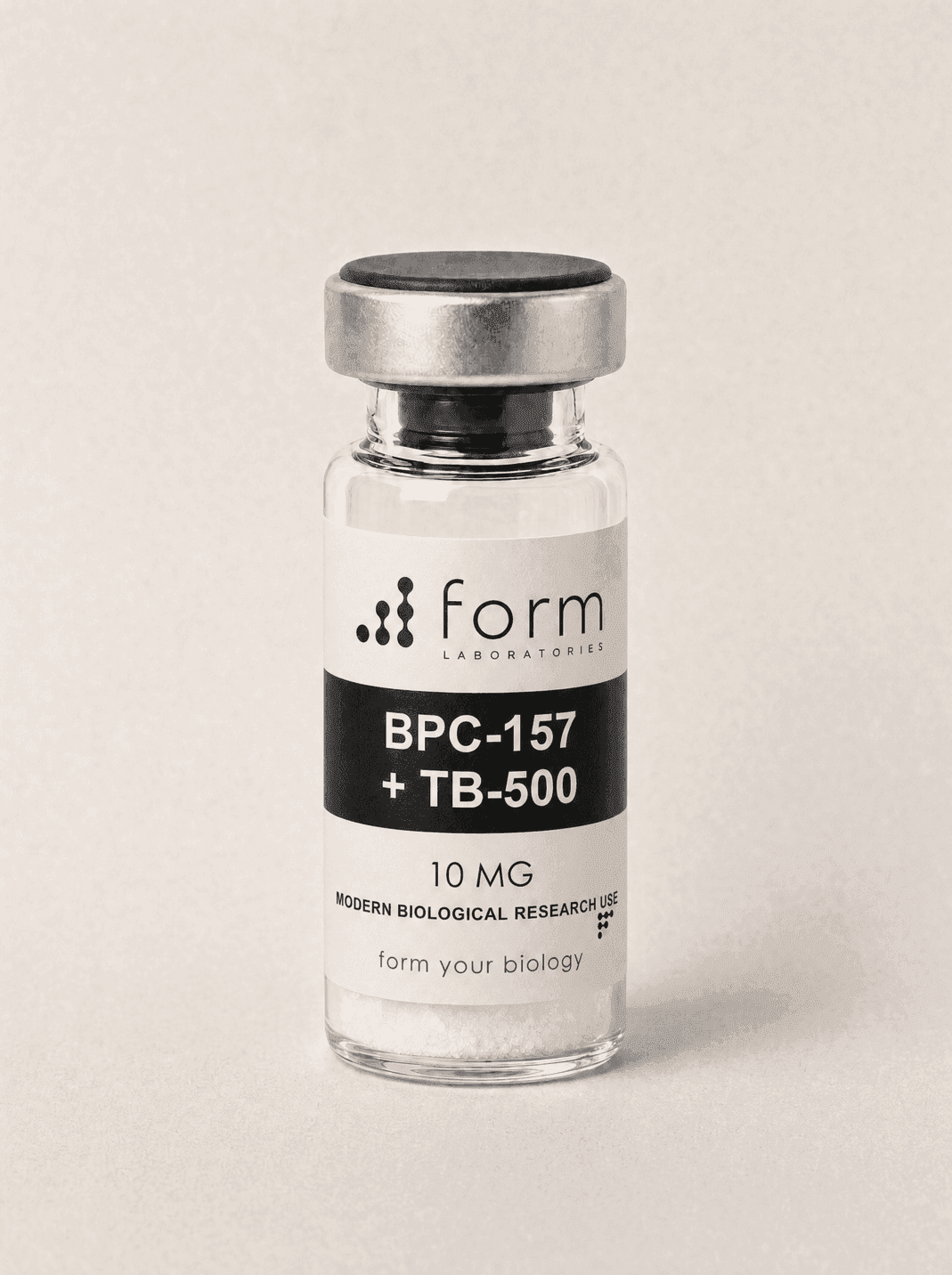
Research-use-only catalogue
Continue to the product record.
Review lot-facing product details, pricing, and checkout boundaries on the matching product page.
View RTA - from $149.00 AUD