
Amino acids in the TB-500 fragment, Ac-LKKTETQ - an identity fact, not a product claim.
Esposito et al., 2012Plain-English research guideTB-500 / Ac-LKKTETQ (thymosin beta-4 fragment)
TB-500 research guide
Everything worth knowing, without the jargon.
TB-500 is a synthetic seven-amino-acid peptide (Ac-LKKTETQ) that copies the active, actin-binding part of a natural protein, thymosin beta-4. It's studied - mostly in cells and animals - for tissue repair and cell movement. It is not the same as the full thymosin beta-4 protein.
REV 2026-07 · 7 Aug 20266 peer-reviewed studiesResearch-use-only context
What the papers reportThird-party literature - not product claims
The stretch of the 43-amino-acid thymosin beta-4 protein this fragment matches.
Van Troys et al., 1996When the parent protein, thymosin beta-4, was first fully sequenced.
Low et al., 1981Published human trials of the TB-500 fragment - the evidence is lab and animal only.
Published researchWhy it matters
The fragment, not the whole protein.
TB-500 is a shortcut name for one small, active piece of a natural protein called thymosin beta-4. The protein is 43 amino acids long; TB-500 is just the seven that bind actin (a building block that helps cells hold shape and move).
This matters for reading the research. Most of the impressive findings - wound healing, new blood vessels, heart-tissue work - are about the full thymosin beta-4 protein, not this fragment on its own. The direct evidence for the fragment is much thinner, and it's almost all in cells and animals. So this guide keeps the two clearly apart.
How it works
Seven amino acids of a much larger protein.
A plain-English look at each pathway, kept at a summary level.
The actin-binding part
The fragment copies the 'LKKTET' region of thymosin beta-4 - the part that binds actin. That's its identity, and the reason the fragment was made.
Cell movement & repair
The parent protein is studied for how cells migrate and how wounds close. The fragment reproduced some of that in one mouse study, but most evidence is on the whole protein.
Fragment vs whole protein
The big-name findings are about full thymosin beta-4. The fragment's own direct research is limited and mostly analytical - the guide keeps that honest.
Pharmacology at a glance
- Research code
- TB-500 (Ac-LKKTETQ)
- Class
- A synthetic peptide fragment - the actin-binding region (residues 17-23) of the protein thymosin beta-4.
- Molecule
- A short lab-made chain of seven amino acids, N-acetylated (a small chemical cap on one end): Ac-LKKTETQ. Not the full 43-amino-acid thymosin beta-4 protein.
- Route studied
- In the animal studies of the fragment and the parent protein it was given by injection. That's the research record, not use guidance.
- Reported half-life
- Not established in humans. The published fragment work is mostly analytical (detection) rather than pharmacokinetic.
- Originator
- The fragment was characterised for anti-doping testing (Esposito and colleagues, 2012); the parent protein, thymosin beta-4, was sequenced by Low and colleagues in 1981.
- Approval status
- Not an approved medicine anywhere - a preclinical research compound. On the World Anti-Doping Agency prohibited list.
What it has been studied for
Study areas from the published literature.
Actin binding (identity)
The region of thymosin beta-4 that binds actin - mapped in the lab, and the basis for the fragment.
Van Troys et al., EMBO J, 1996Wound healing (parent protein)
Wound repair and skin-cell migration - studied on the full thymosin beta-4 protein in animals.
Malinda et al., J Invest Dermatol, 1999Wound healing (the fragment)
The short fragment reproduced some of the parent protein's wound-repair effect in a mouse model - the best direct precedent, still animal-only.
Philp et al., Wound Repair Regen, 2003Identity & detection
Making and detecting the Ac-LKKTETQ fragment for anti-doping testing - analytical work, not efficacy.
Esposito et al., 2012; Ho et al., 2012Metabolism (the fragment)
How the fragment breaks down; notably, the fragment itself didn't raise wound-healing activity in a dish - a metabolite did.
Rahaman et al., J Chromatogr B, 2024Human evidence
There are no published human trials of the fragment; one early-phase safety study is recruiting.
ClinicalTrials.gov NCT07487363The studies
The evidence, study by study.
Open any study for a plain summary, what it measured, the finding, and a link to the paper.
This paper worked out the full 43-amino-acid sequence of thymosin beta-4 - the protein that TB-500 is a small piece of.
- Studied in
- Biochemical work on thymosin beta-4 from cattle.
- Design
- A protein-sequencing study.
- Measured
- The complete amino-acid sequence of thymosin beta-4.
It established the full sequence of the parent protein. TB-500 is just seven of those 43 amino acids - so this is background, not a TB-500 study.
DOI 10.1073/pnas.78.2.1162This lab study mapped which part of thymosin beta-4 binds actin - and pinpointed the stretch (residues 17-23) that TB-500 copies.
- Studied in
- Lab experiments with thymosin beta-4 and engineered variants.
- Design
- An in-vitro (test-tube) structure-function study.
- Measured
- Which residues were needed to bind actin.
It identified the 'LKKTET' region as the actin-binding part - the rationale for making the TB-500 fragment. It's about the whole protein, not the fragment product.
DOI 10.1002/j.1460-2075.1996.tb00350.xThis study looked at whether the full thymosin beta-4 protein sped up skin-wound healing in rats.
- Studied in
- Rats (in-vivo) plus cultured skin cells.
- Design
- An animal wound-healing model plus cell experiments.
- Measured
- How quickly wounds re-covered with skin, and how skin cells migrated.
Full-length thymosin beta-4 was reported to speed wound re-covering in rats. It's about the parent protein, in animals - not the TB-500 fragment or people.
DOI 10.1046/j.1523-1747.1999.00708.xThis is the closest genuine study of a TB-500-type short fragment: it tested the seven-amino-acid actin-binding peptide in mice with slow-healing wounds.
- Studied in
- Mice (diabetic and aged models).
- Design
- An animal wound-healing model comparing the full protein and the short fragment.
- Measured
- How well wounds healed.
The short fragment reproduced much of the full protein's wound-repair effect in these mice - the best direct precedent for a TB-500-type fragment, but still an animal result.
DOI 10.1046/j.1524-475X.2003.11105.xThis paper made and characterised the exact Ac-LKKTETQ fragment sold as 'TB-500', mainly so anti-doping labs could detect it.
- Studied in
- Laboratory chemistry.
- Design
- A synthesis and characterisation (analytical) study.
- Measured
- The fragment's structure and how to identify it.
It's the reference that pins down what 'TB-500' actually is - the N-acetylated 17-23 fragment. It's an identity paper, not evidence of any effect.
DOI 10.1002/dta.1402A recent study measured the TB-500 fragment and its breakdown products, and tested wound-healing activity in a dish.
- Studied in
- Lab (in-vitro) plus rats.
- Design
- An analytical and in-vitro study of the fragment and its metabolites.
- Measured
- Fragment and metabolite levels, plus in-vitro wound-healing activity.
Notably, the TB-500 fragment itself didn't significantly raise wound-healing activity in the dish - one of its breakdown products did. A useful reminder that the fragment's own direct evidence is limited.
DOI 10.1016/j.jchromb.2024.124033Risks recorded in studies
The side effects the trials reported.
Direct human safety is unknown
Not establishedThere are no completed human trials of the TB-500 fragment, so its human safety profile isn't established.
The evidence is mostly about a different molecule
A key caveatMost of the well-known findings are on full-length thymosin beta-4, not this fragment. Reading them as TB-500 evidence overstates what's actually known about the fragment.
Banned in sport
RegulatoryTB-500 is on the World Anti-Doping Agency prohibited list, so it isn't permitted for athletes.
Not an approved medicine
RegulatoryNo medicines regulator (the TGA in Australia, the FDA, the EMA) has approved TB-500 for any use. It's supplied here only as a research material.
This section summarizes third-party trial records. It is not a complete safety profile or advice.
Where evidence stops
Groups and questions not established.
- People: there are no published human trials of the fragment; one early-phase safety study is only now recruiting.
- The fragment on its own: much of the research is on the full protein, so the fragment's direct effects are under-studied.
- Long-term safety: not established, in animals or people.
- Doses, timing and preparation: not covered here - Form Labs gives no such guidance.
Development and status
Where the research record sits.
The parent protein, thymosin beta-4, is fully sequenced.
The actin-binding region (residues 17-23) is mapped - the basis for the fragment.
Wound-healing studies: the full protein in rats, then the short fragment in mice.
The exact Ac-LKKTETQ 'TB-500' fragment is made and characterised for anti-doping testing.
A metabolism study finds the fragment itself underperformed a breakdown product in vitro; an early-phase human safety trial begins recruiting.
Approval status: Not an approved medicine anywhere - a preclinical research compound. On the World Anti-Doping Agency prohibited list.Whatever the molecule’s status elsewhere, what Form Labs supplies is research-use-only reference material - for laboratory work, not for people or animals.
Evidence and limitations
What this means, and what it does not.
It's preclinical
The evidence is in cells and animals. Animal results often don't carry over to people, and for this fragment that step is barely tested.
Most evidence is about the parent protein
The famous thymosin beta-4 findings are on the full 43-amino-acid protein, not this seven-amino-acid fragment. The fragment's own direct research is limited and mostly analytical.
The fragment underperformed in one recent test
A 2024 study found the TB-500 fragment itself didn't raise wound-healing activity in a dish - a metabolite did. That's a caution against assuming the fragment behaves like the whole protein.
Where Form Labs fits
This guide is a plain-English summary of published research Form Labs did not run. It's not medical advice, not a product claim, and not use guidance. We supply TB-500 strictly as reference material, with a batch number you can match to its lab report.
Lab handling
Reference-material handling context.
Research-use boundary
TB-500 is supplied strictly for laboratory research. It is not for human consumption, veterinary, medical, or cosmetic use, and no directions for use are given.
Storage
Supplied freeze-dried. Keep it at 2-8 C (fridge-cold) and out of light, following the vial label, the matching lab report for the batch, and your lab's own written procedures.
Reconstitution
Reconstitution means mixing the dry powder back into liquid for handling. This guide doesn't set a method - that's down to the receiving lab's written protocol and the batch paperwork.
Stability
How long a freeze-dried peptide stays within spec depends on how it's stored, and is tracked through the batch paperwork. Any working window after it's mixed belongs in the lab's own protocol, not this guide.
Glossary
Plain-English definitions.
- Peptide
- A short chain of amino acids - the building blocks of proteins.
- Thymosin beta-4
- A natural 43-amino-acid protein; TB-500 is a short, seven-amino-acid piece of it.
- Fragment
- A shorter piece of a larger peptide or protein.
- Actin
- A protein inside cells that helps them hold shape and move.
- N-acetylated
- A small chemical cap (the 'Ac') added to one end of the fragment.
- Preclinical
- Research in cells and animals, before (or instead of) trials in people.
- In-vitro
- In a dish or test tube, outside a living body.
- In-vivo
- In a living animal.
- Metabolite
- A breakdown product a compound turns into in the body.
- Research use only
- Supplied for laboratory research - not for human or animal use, and not a medicine.
FAQ
Questions answered plainly.
TB-500 is a synthetic seven-amino-acid peptide (Ac-LKKTETQ) that copies the actin-binding part of the protein thymosin beta-4, studied - mostly in cells and animals - for tissue repair. TB-500 isn't the full protein, and it isn't an approved medicine.
No. Thymosin beta-4 is a full 43-amino-acid protein; TB-500 is just a seven-amino-acid piece of it - the actin-binding region (residues 17-23). Most of the well-known research is on the whole protein, so it shouldn't be read as direct evidence for the shorter TB-500 fragment.
Weaker than it looks. Most of the famous thymosin beta-4 findings (wound healing, blood vessels, heart tissue) are on the full 43-amino-acid protein, not the seven-amino-acid TB-500 fragment. Direct fragment research is thin and largely analytical, and a 2024 study (Rahaman et al.) found the fragment itself didn't raise wound-healing activity in a dish - a breakdown product did.
The parent protein, thymosin beta-4, is studied for cell migration and wound repair (Malinda et al., 1999, in rats) and for the actin-binding region that TB-500 copies (Van Troys et al., 1996). The clearest study of a TB-500-type short fragment is Philp et al. (2003) in mice. All of it is preclinical - cells and animals.
There are no published human trials of the TB-500 fragment. One early-phase safety study (ClinicalTrials.gov NCT07487363) is recruiting but has no results. Some early human trials exist for the full thymosin beta-4 protein, run years ago, but none led to an approved medicine and none was of the fragment sold as TB-500.
Ac-LKKTETQ is TB-500's sequence: seven amino acids with an acetyl group - the 'Ac' - capping one end. This stretch matches residues 17-23 of thymosin beta-4, the part that binds actin (a protein that helps cells hold their shape and move).
TB-500 and BPC-157 are unrelated peptides that both appear in tissue-repair research. TB-500 is a 7-amino-acid fragment of the protein thymosin beta-4; BPC-157 is a 15-amino-acid peptide based on a gastric-juice protein. Different origins and sequences, both preclinical, and no research on combining them.
TB-500 is not approved as a medicine by any regulator (the TGA, FDA or EMA), and it's on the World Anti-Doping Agency prohibited list for athletes. Form Labs supplies TB-500 strictly as a laboratory research material, not for human or veterinary use.
Form Labs supplies peptides strictly as laboratory research materials. This guide is a plain-English summary of published research Form Labs did not run - not medical advice, not a product claim, and not guidance for any human or veterinary use.
References
Every figure, sourced.
Educational references to third-party literature. Form Labs is unaffiliated with the study authors.
Full amino-acid sequence of the parent protein, thymosin beta-4. Low TLK, Hu SK, Goldstein AL. PNAS, 1981; 78(2): 1162-1166.
DOIIn-vitro mapping of the actin-binding region (residues 17-23) of thymosin beta-4. Van Troys M, et al. The EMBO Journal, 1996; 15(2): 201-210.
DOIRat study of wound healing with full-length thymosin beta-4. Malinda KM, et al. Journal of Investigative Dermatology, 1999; 113(3): 364-368.
DOIMouse study in which the short actin-binding fragment reproduced the protein's wound-repair effect. Philp D, et al. Wound Repair and Regeneration, 2003; 11(1): 19-24.
DOISynthesis and characterisation of the Ac-LKKTETQ 'TB-500' fragment for anti-doping detection. Esposito S, et al. Drug Testing and Analysis, 2012; 4(9): 733-738.
DOIMetabolism study of the TB-500 fragment; the fragment itself did not significantly raise in-vitro wound-healing activity. Rahaman KA, et al. Journal of Chromatography B, 2024; 1235: 124033.
DOICitations are provided for education only. No therapeutic, weight-loss, or efficacy claims are made.
How we produce these guides
- Who writes them
- These guides are written and maintained in-house by the Form Laboratories research team. They are not authored by a named clinician, and nothing in them is medical advice. Where a guide is short, that is because the published research is thin - we would rather say so than fill the space.
- What they are built from
- Each guide summarises published, peer-reviewed literature. Every study we describe is listed in full at the bottom of the page with a link to the original paper, so you can open it and check what it actually says. Form Laboratories did not run any of the cited studies.
- What they deliberately leave out
- These guides describe how the biology works and what the published research measured. They do not contain dosing, preparation, reconstitution or administration instructions, and they make no claim about what any compound would do for a person. Everything we supply is research-use-only reference material.
- How we handle uncertainty
- Where the evidence is limited to cell cultures or animals, we say so in the study entry rather than implying a human result. Where a compound has no completed human trial, the guide states that plainly.
The product
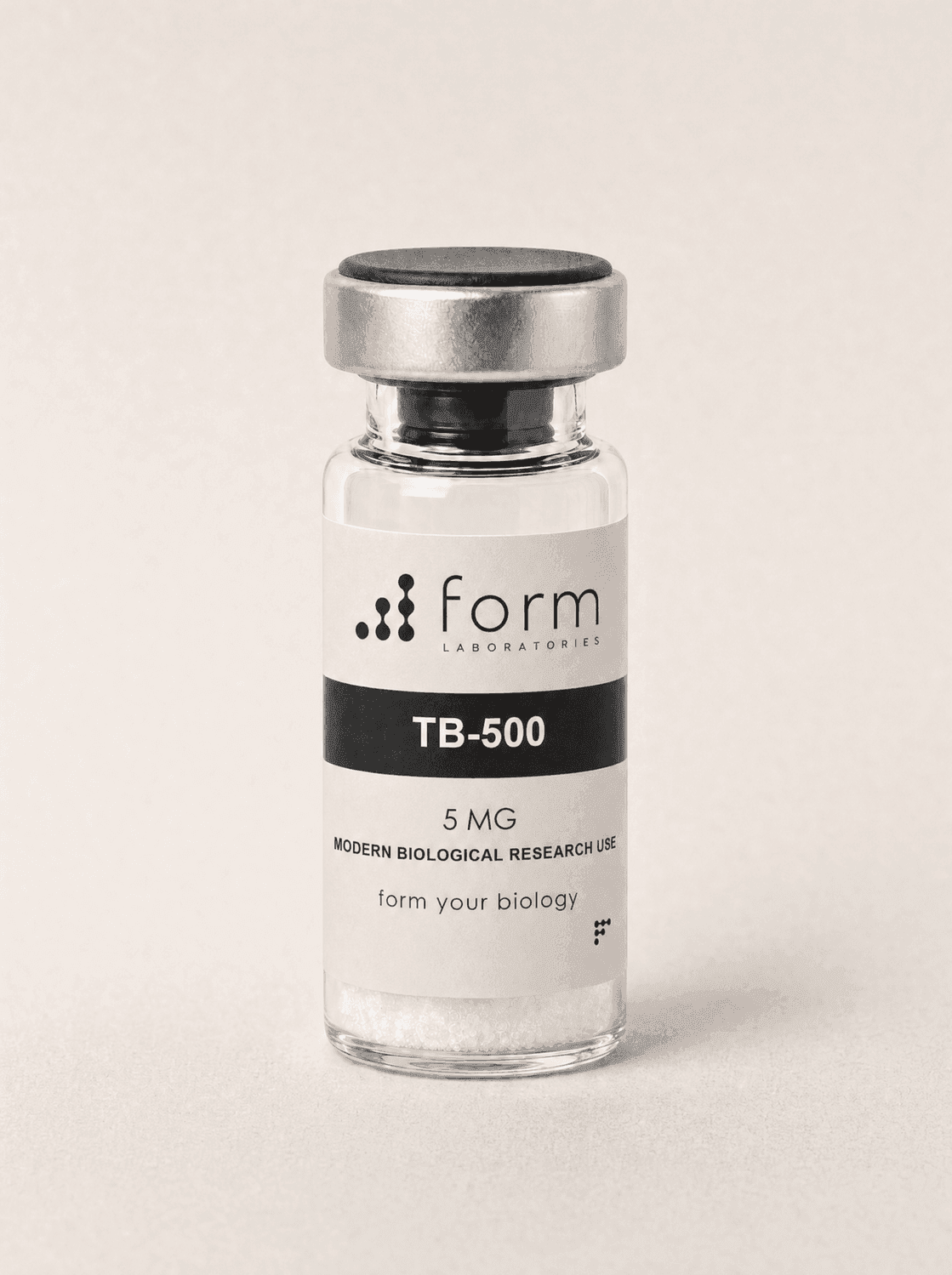
Form Laboratories - TB-500
Ready to see TB-500?
- Independently tested - purity printed on the lab report.
- A batch number on every vial, matched to its report.
- Ships from Perth via Australia Post or CouriersPlease in plain packaging.
Build your stack
Compare nearby catalogue records.
These nearby records stay inside the research-only catalogue.
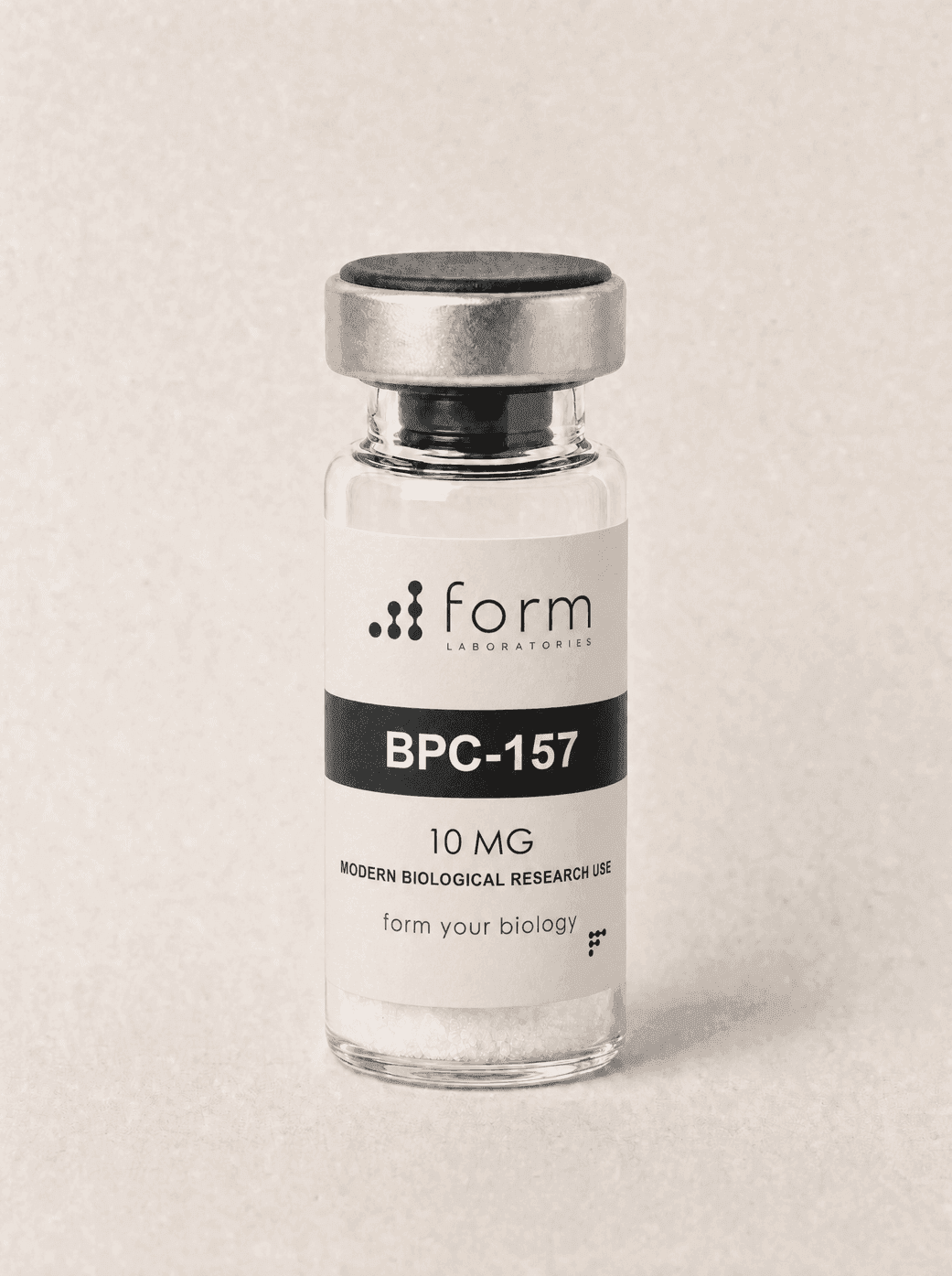
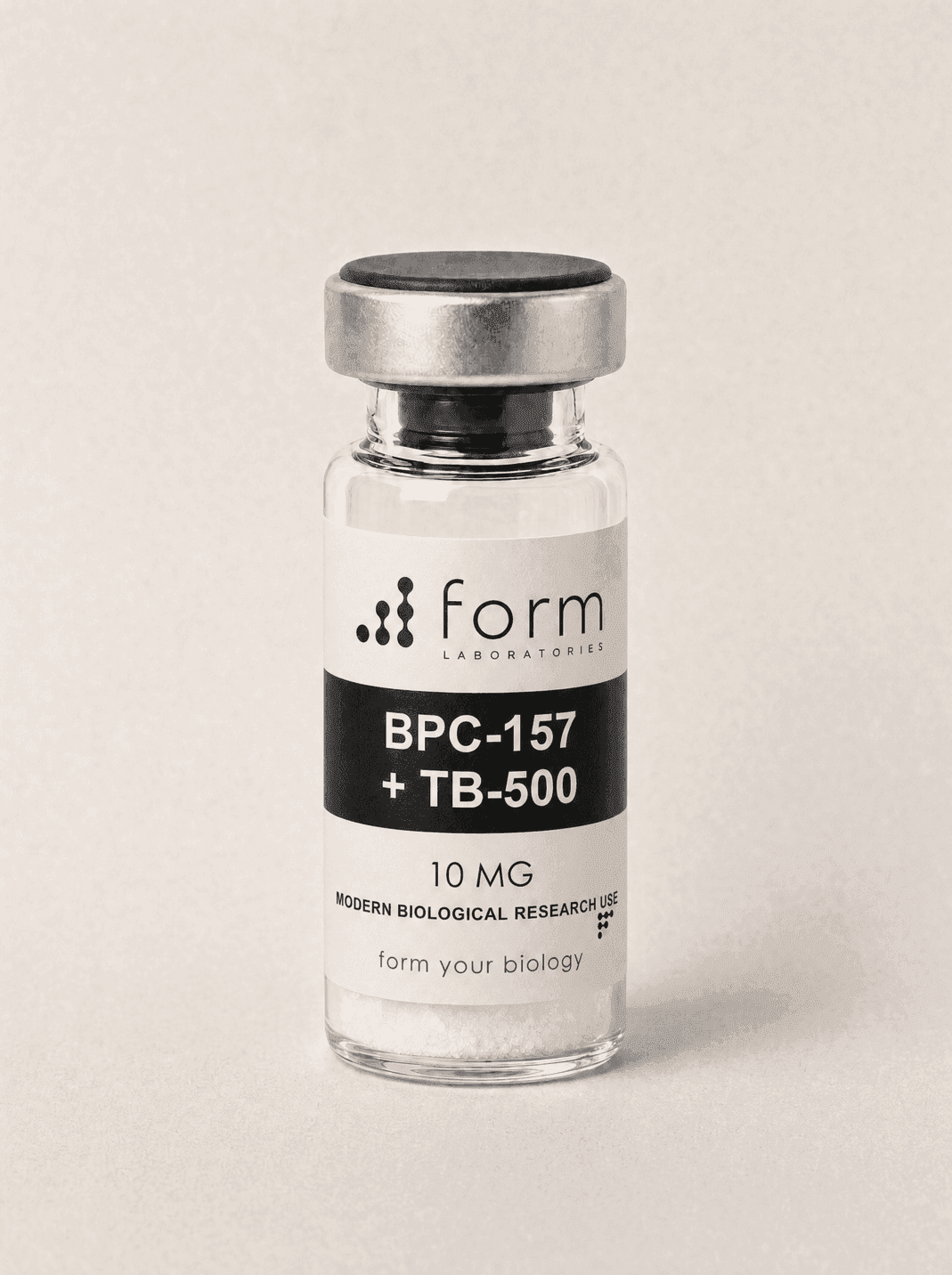
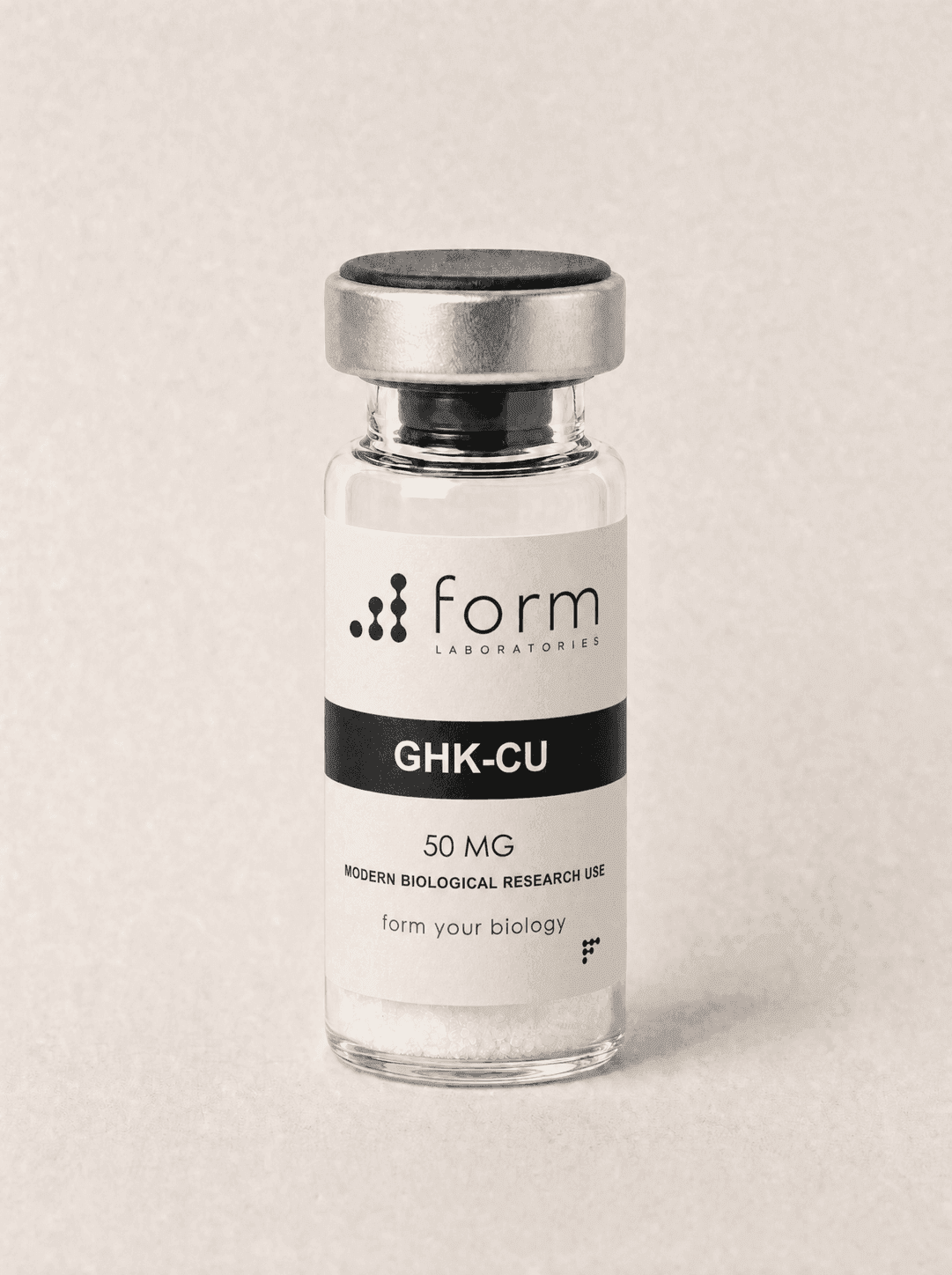
Research-use-only catalogue
Continue to the product record.
Review lot-facing product details, pricing, and checkout boundaries on the matching product page.
View TB-500 - from $109.00 AUD