
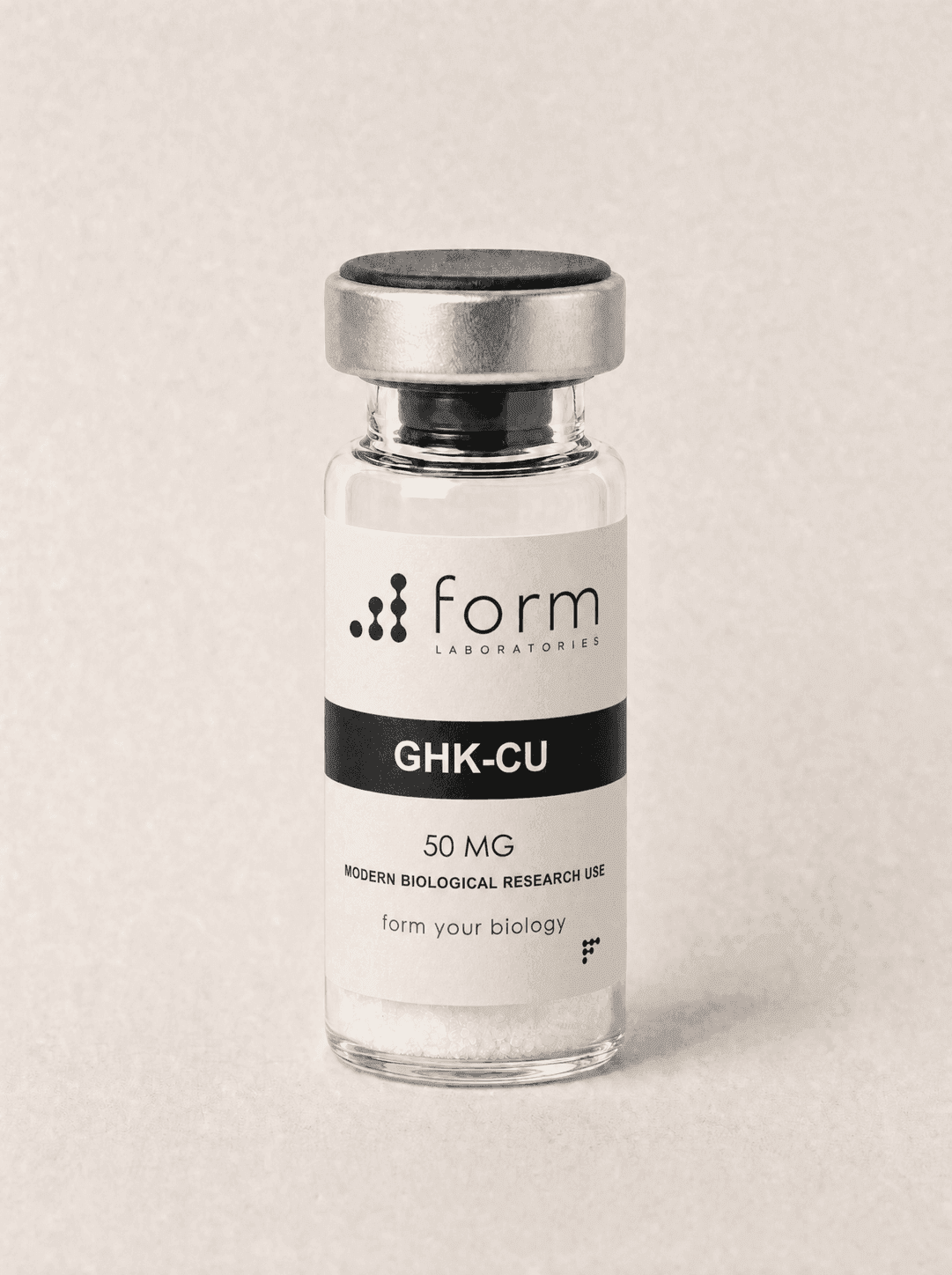
GHK-Cu is the copper-bound form of a three-amino-acid peptide - glycyl-histidyl-lysine. An identity fact, not a product claim.
Schlesinger et al., Experientia, 1977Naturally occurring copper peptide
GHK-Cu
A naturally occurring copper peptide the body already makes - studied for decades in the lab. Supplied for laboratory research only.
Your body already makes this one. GHK-Cu is tiny - three amino acids holding onto a single copper atom, which is what turns the powder its distinctive blue. It was found circulating in human blood in the 1970s and has been studied in the lab ever since. Supplied freeze-dried, for laboratory research only.
Current lot pricing
$79.00 AUD
Base vial price: $79.00 AUD
Vial size50 mg
Ships from Perth, Australia Post or CouriersPleaseFree standard shipping over $250Plain, discreet packagingStore at 2-8 C
Supplied strictly as reference material for in-vitro laboratory research. Not a medicine, supplement, or food. Not for human or veterinary use.
 Research use only
Why this molecule is studied
Why researchers are studying it.
Start with the honest bit. GHK-Cu is one of the most-studied small peptides there is, and almost none of that study is in people. The record is laboratory and cell work - cultures, model systems, and analysis of which genes switch on or off. There are no large human trials of the kind the newer metabolic peptides have.
What made it interesting in the first place is that your body makes it, and then makes less of it. The 1970s work found GHK circulating in human blood; a 2018 review reports that level falling from roughly 200 ng/mL in a young adult to around 80 ng/mL by age 60. That decline is what sent researchers looking.
Most of the questions since have been about the copper. GHK on its own is three amino acids; GHK-Cu is that same peptide holding a copper atom. Copper is essential to a great deal of the body's chemistry and also damaging if it wanders around loose, so how a small peptide picks it up, carries it and hands it over is a real research question. That is where the collagen and tissue-repair studies start, and what most of them actually measure is which genes shift activity in cultured cells - not an outcome in a person.
This page is about that research and the batch you are getting. It is not a claim about what this vial will do for anyone, and it is not for people or animals to take.
The research
What the published studies found.
The year the peptide's growth-modulating activity was first reported, in liver-cell research. Published research context, not a product claim.
Pickart, Thayer & Thaler, Biochem Biophys Res Commun, 1973About the level of GHK naturally circulating in a young adult's plasma; a 2018 review reports it falling to roughly 80 ng/mL by age 60. It's a peptide the body makes itself. Literature context, not a product claim.
Pickart & Margolina, Int J Mol Sci, 2018In gene-profiling research, the share of the genes analysed whose activity GHK shifted by at least half - some up, some down. A published research figure, not a product claim.
Pickart & Margolina, Int J Mol Sci, 2018Figures outside lot paperwork describe third-party research records for the molecule. They are not Form Labs product results or use claims.
Read the full research guideIdentity, papers, and research-use boundariesMechanism notes
Plain-language research labels.
Two things working together: a tiny peptide, and the copper atom it carries. Here is what each part is doing - the chemistry the papers discuss, not a description of what this vial does.
GHK - the peptide
Three amino acids in a row - glycine, histidine, lysine - and that is the entire molecule. On its own it is written GHK, and it is the same small peptide your body makes and carries around in your blood.
Cu - the copper
GHK grabs a single copper atom and holds onto it. That is what the '-Cu' means, and what turns the powder blue. Copper matters here because the body needs it for a great deal of its chemistry but cannot let it drift about loose - so molecules that pick copper up, carry it and hand it over are worth understanding.
Why the pairing matters
Almost all the published studies use the copper-bound form specifically, not bare GHK. The two behave differently enough that reading findings about one as findings about the other would be a mistake - so the page keeps them as separate records, and the lab report confirms which is in the vial.
Order anchor
Form Laboratories
GHK-Cu with live bundle pricing.
- Independently tested for purity and identity, with the result printed on the lab report
- A batch number on every vial that matches its lab report, so you can always check the two line up
- Ships from Perth via Australia Post or CouriersPlease in plain, unbranded packaging, with tracking emailed
- 30-day purity guarantee: if an independent re-test comes back below the purity on the report, we refund the order in full
Base tier
$79.00 AUD
Single vial / 50 mg / $79.00 AUD per vial
Ships after order review. Reference material for research use only.
Testing documentation
Lot-level records
Australia-wide dispatch
Plain, tracked delivery
Plain fulfilment
Discreet outer packaging
Research use only
No human-use claims
COA proof
Batch paperwork before checkout.
24-0417
Compound, lot and appearance are taken from the product record.
Heavy metals screened by an independent lab: arsenic, cadmium and mercury not detectedLab report on file covers heavy metals onlyAppearance: blue freeze-dried powder
Certificate of Analysis24-0417
CompoundGHK-Cu
Lot24-0417
Net peptide50 mg
AppearanceFreeze-dried reference material
ReleasedCurrent product record
Download COA summary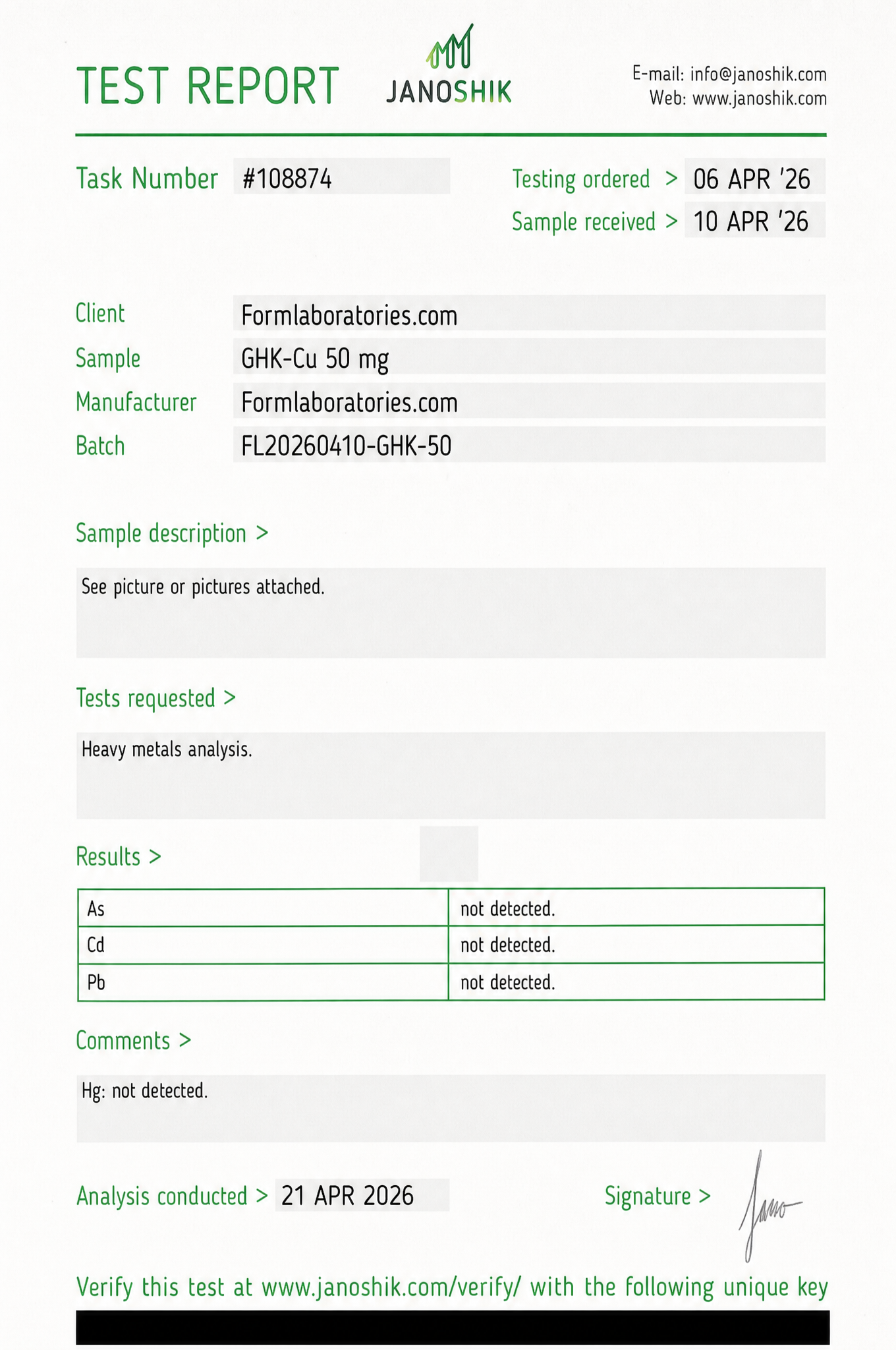
Build your stack
Study alongside other catalogue references.
These products are shown as catalogue pairings only. Add any line to the same cart for order review.
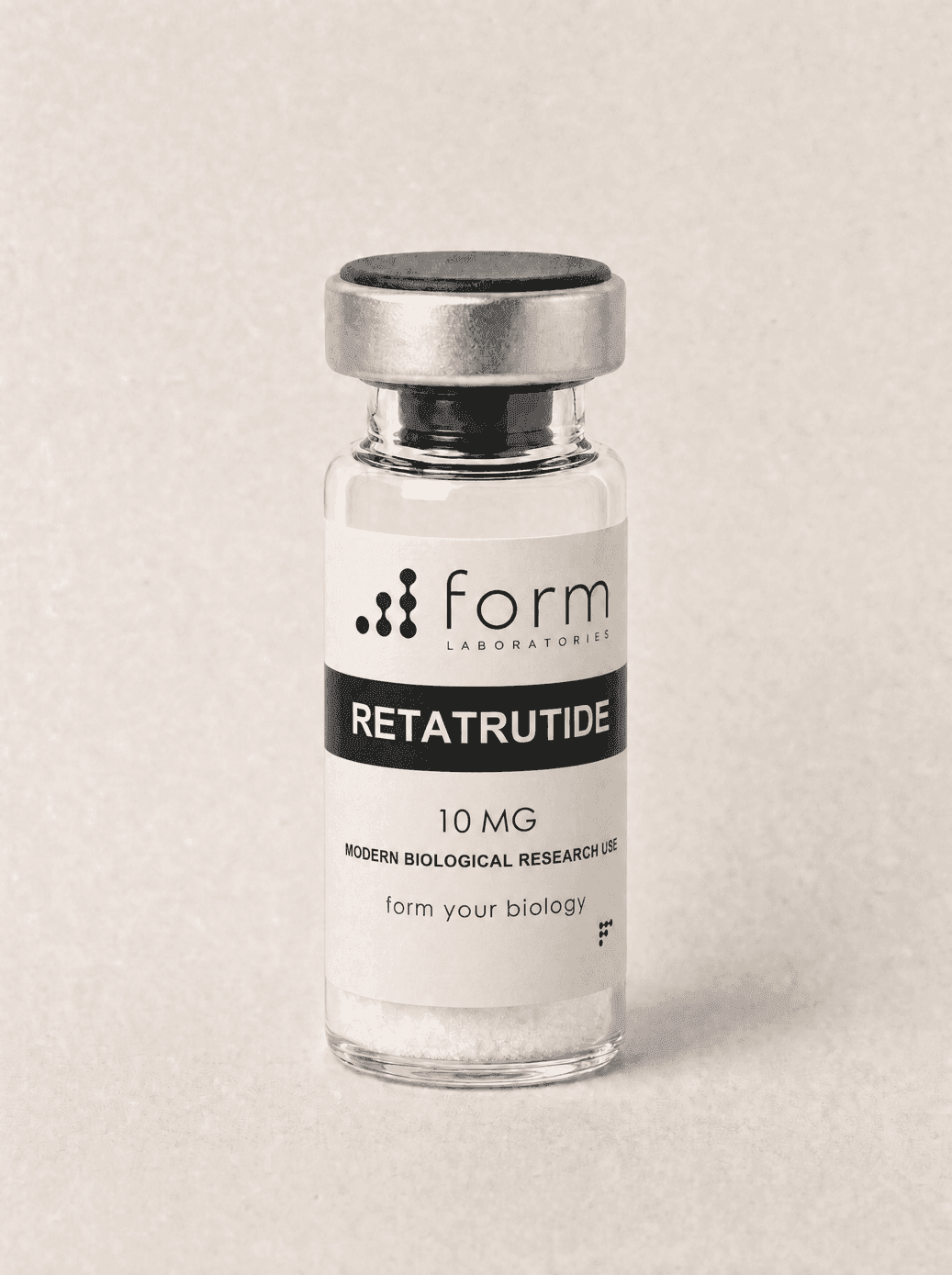
Triple-receptor research peptide
Retatrutide
$149 AUD
Researchers can study this catalogue reference alongside GHK-Cu in the same order record.
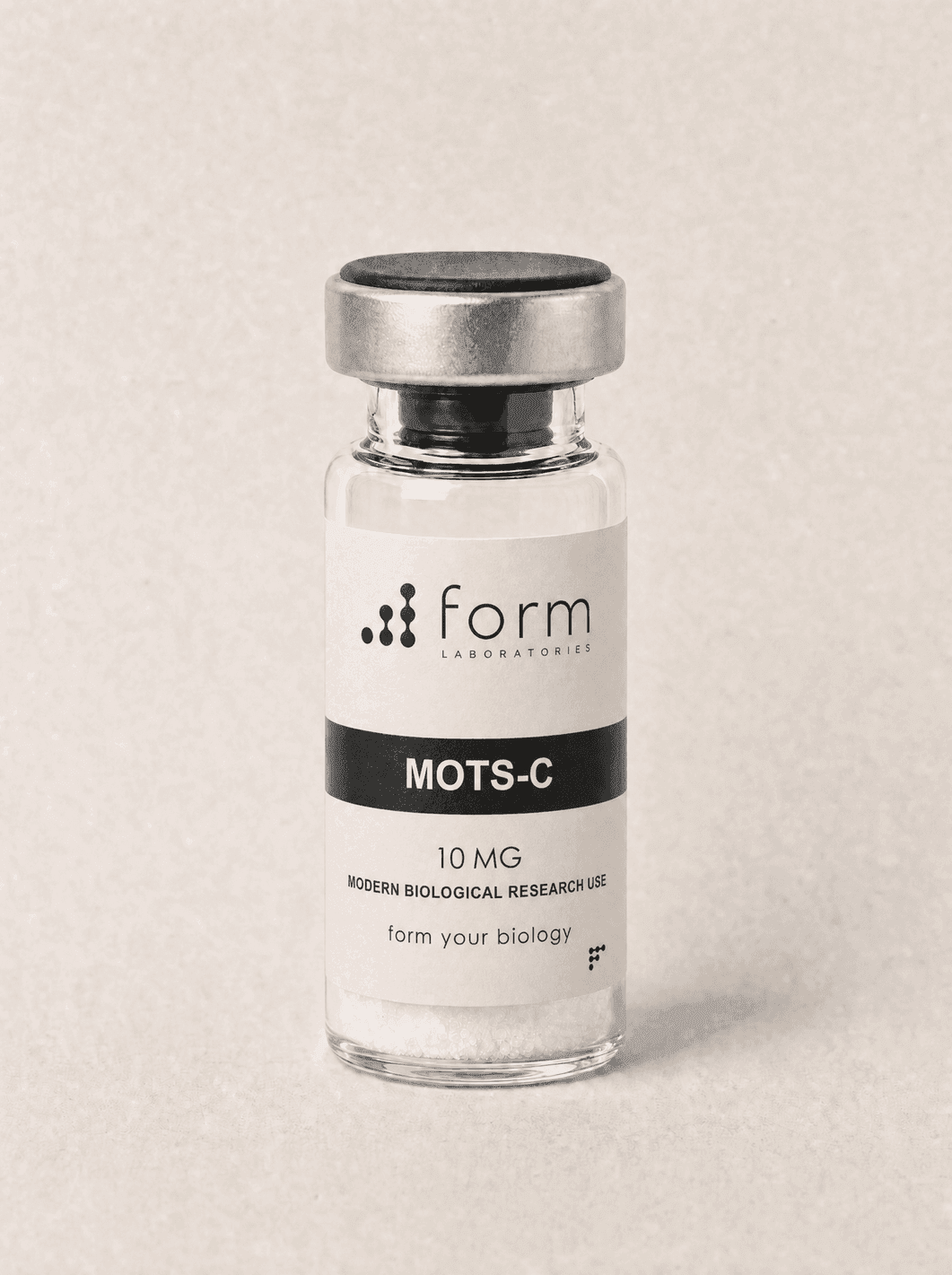
Mitochondrial-derived peptide
MOTS-C
$99 AUD
Researchers can study this catalogue reference alongside GHK-Cu in the same order record.
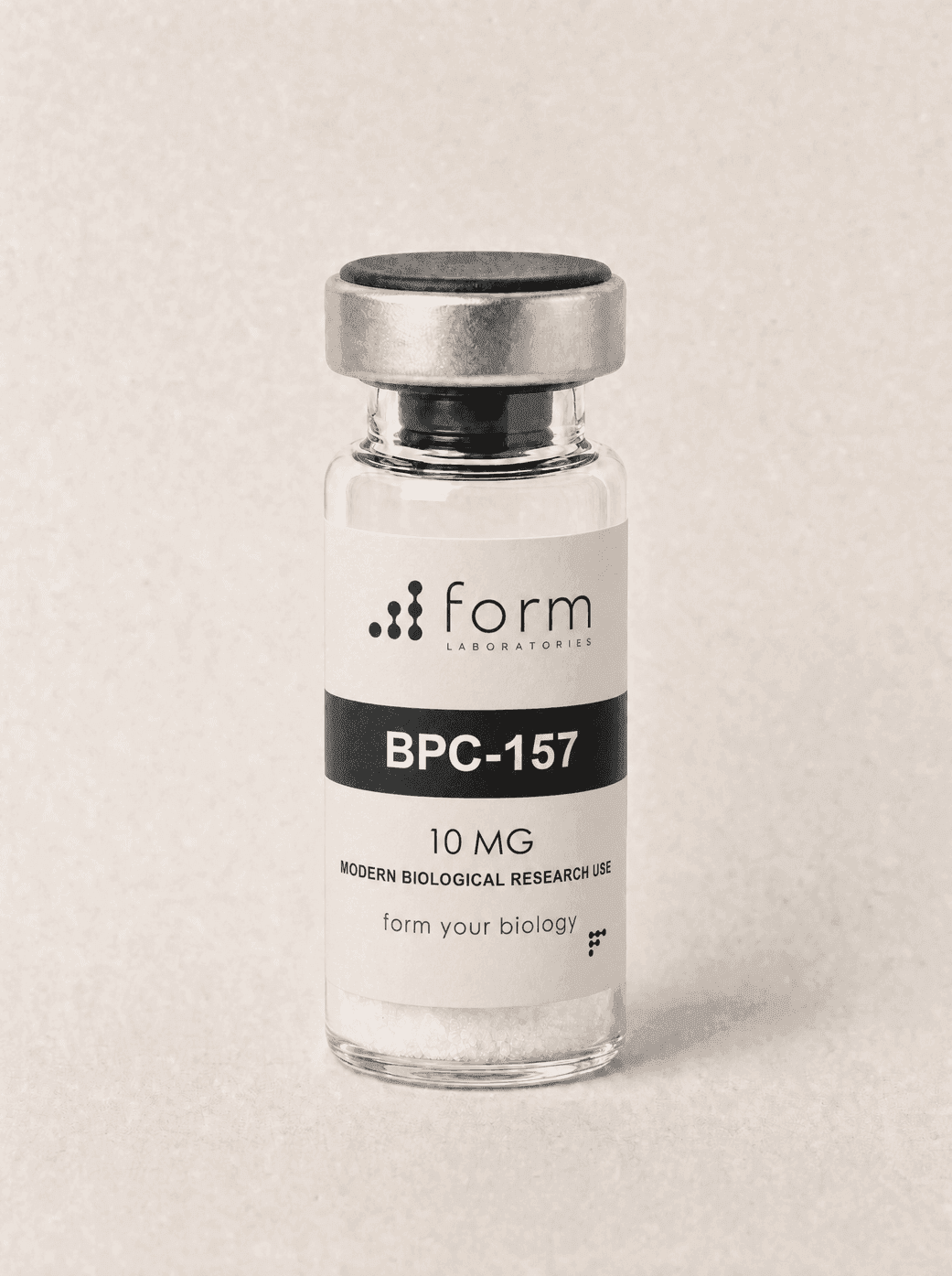
15-amino-acid research peptide
BPC-157
$99 AUD
Researchers can study this catalogue reference alongside GHK-Cu in the same order record.
FAQ
Questions, answered plainly.
GHK-Cu is supplied as laboratory research material only. It is 21+ only, not for human consumption, and not for veterinary use.
The product page lists the lot, appearance, and storage notes for GHK-Cu, and shows the lab report on file where there is one. Those reports are heavy-metals screens: they do not measure purity and do not confirm identity.
Follow the label and matching COA paperwork. This page repeats 2-8 C storage guidance and light-protection notes before checkout.
GHK-Cu is the copper-bound form of GHK, a three-amino-acid peptide (glycyl-histidyl-lysine) that the body makes naturally and that has been studied since the 1970s. The spec sheet lists it as the copper(II) complex with formula C14H24CuN6O4 and a molecular weight of 403.92 g/mol. It is supplied as a freeze-dried blue powder for laboratory research only. Form Laboratories supplies it as reference material, not for human use.
No. 'Free GHK' is the peptide alone (CAS 49557-75-7), while 'GHK-Cu' is the copper-bound 1:1 complex (CAS 89030-95-5) that most published research actually uses. They carry separate registry records, so the page keeps them as distinct identities. The lab report for the current batch confirms which form is in the vial.
Match the compound name, the 50 mg size, and lot 24-0417 against the product label and the batch paperwork. The lab report on file for GHK-Cu is a Janoshik heavy-metals screen, which reports arsenic, cadmium and mercury as not detected; it does not measure purity and does not confirm identity. Appearance is a blue freeze-dried powder and storage is 2-8 C protected from light. Always confirm the vial against the batch paperwork before lab intake.
Add the size and quantity you want to your cart and check out. Instead of paying by card, you'll get an emailed invoice with our bank details - pay by bank transfer, quoting the reference. Once the payment clears we pack your order and send it, and you'll get a tracking email. A faster transfer (PayID or Osko) gets things moving sooner.
Every batch is sent to an independent lab, Janoshik. The lab report on file is a Janoshik heavy-metals screen: it reports arsenic, cadmium and mercury as not detected. It does not measure purity, does not confirm identity, and does not test for bacterial residue. The report is tied to the batch number on your vial.
It ships from our base in Perth via Australia Post or CouriersPlease, in plain packaging with nothing identifying on the outside, once your payment has cleared. You'll get a tracking email. On arrival, store it in the fridge at 2-8 C and keep it out of light - copper peptides are light-sensitive, so dark, cold storage matters.
No. It's supplied strictly as reference material for laboratory research - not a medicine, supplement, cosmetic, or food, and not for people or animals to use. The research described on this page is about the GHK-Cu molecule in published studies, not about a Form Labs product.
Form your biology
GHK-Cu, with the batch details visible.
Before you order, check the batch number shown on the page against the lab report for that batch.
Added to cart