
Compound hub · PT-141
PT-141 side effects
In the two phase 3 trials of PT-141 (bremelanotide), women on bremelanotide reported more nausea than women on placebo, a dummy treatment. The rates were 40.0% against 1.3%. They also reported more flushing (20.3% against 0.3%) and more headache (11.3% against 1.9%). The FDA label also warns of a short rise in blood pressure with a fall in heart rate. It warns of focal hyperpigmentation too, which means patches of darker skin.
01Common effectsContents
A molecule can fit docking sites in more than one tissue. Then its effects can show up in more than one place. Your gut, your skin and your blood vessels all answer to signals from your nervous system. A peptide that acts on melanocortin receptors can reach all three. This page belongs to the PT-141 hub. It sets out what was recorded.
Every figure here comes from the FDA label or the trial papers. Each one describes the women who were studied. The study findings page explains who those women were. How PT-141 works covers the receptors.
Key facts
| Nausea, bremelanotide vs placebo | 40.0% vs 1.3% (FDA label, 2019) |
|---|---|
| Flushing | 20.3% vs 0.3% (FDA label, 2019) |
| Headache | 11.3% vs 1.9% (FDA label, 2019) |
| Vomiting | 4.8% vs 0.2% (FDA label, 2019) |
| Reactions at the administration site | 13.2% vs 8.4% (FDA label, 2019) |
| Stopped because of adverse reactions | 18% vs 2% (FDA label, 2019) |
| Serious adverse reactions | 1.1% vs 0.5% (FDA label, 2019) |
| Women in the safety comparison | 627 on bremelanotide, 620 on placebo (FDA label, 2019) |
| Contraindication | Uncontrolled hypertension or known cardiovascular disease (FDA label, 2019) |
| Label source | Drugs@FDA label for NDA 210557, revised 6/2019 |
What are the common side effects of PT-141?
Nausea, flushing, reactions at the injection site and headache are the most common side effects of bremelanotide in the FDA label. The label pools the two phase 3 trials: 627 women on bremelanotide and 620 on placebo. Nausea affected 40.0% against 1.3%. Flushing is a sudden warm redness of the skin. It affected 20.3% against 0.3%. Headache affected 11.3% against 1.9%, and vomiting 4.8% against 0.2%. The label calls most events mild (31%) to moderate (40%) and transient, which means they passed. Kingsberg and colleagues report nausea, flushing and headache at 10% or more in both studies.
Serious side effects were reported in 1.1% of women on bremelanotide and 0.5% on placebo. One headache was serious. It was intractable pain, meaning pain that would not ease, and it led to a hospital stay.
The label adds a warning about these numbers. You cannot compare rates from one drug's trials directly with rates from another drug's trials.
Why does PT-141 cause nausea, and how long does it last?
The FDA label records when nausea happened and how long it lasted, but it gives no reason why. In the pooled phase 3 trials, nausea began within one hour of administration (the median) and lasted about two hours. It was most common after the first administration, reported by 21% of women. After later ones it fell to about 3%. Thirteen percent of women on bremelanotide received an anti-emetic, which is a medicine against sickness. Eight percent left the trials because of nausea, against none on placebo. The sources opened for this page give no tested explanation for why the nausea occurs.
NCT03973047 is a registered phase 1 trial, which is an early-stage study. It compared the rate of nausea in 228 healthy premenopausal women after one administration of bremelanotide alone or with an anti-nausea medicine. The registry lists no results for it (ClinicalTrials.gov NCT03973047).
Online threads compare PT-141 nausea with Melanotan II nausea. The sources opened for this page include no head-to-head trial of the two. The status page explains why the two molecules have separate records.
Does PT-141 raise blood pressure?
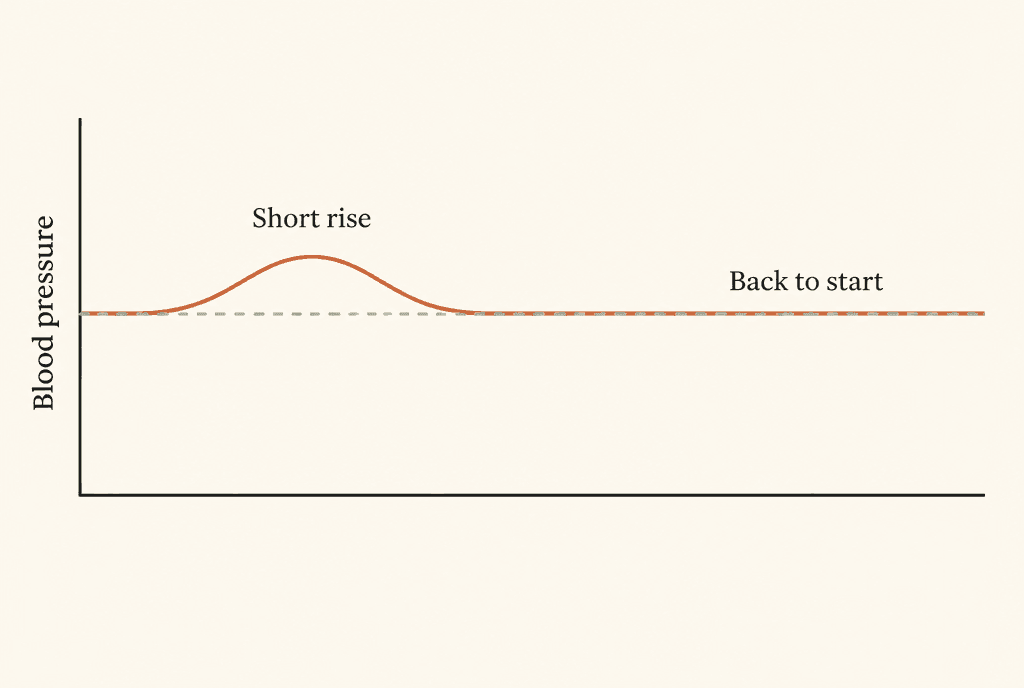
Yes, for a short time. The FDA label says bremelanotide briefly raises blood pressure and lowers heart rate after each administration. In clinical studies, the largest rises were 6 mmHg in systolic pressure, the top number, and 3 mmHg in diastolic pressure, the bottom number. They peaked 2 to 4 hours after the administration. Heart rate fell by up to 5 beats per minute. Both usually returned to their starting level within 12 hours. The label rules the product out for people with uncontrolled high blood pressure or known heart and blood-vessel disease. It does not recommend the product for people at high cardiovascular risk.
One open-label study followed 127 premenopausal women. Everyone in it knew what they received. After eight days, daytime systolic pressure had risen by an average of 1.9 mmHg and diastolic by 1.7 mmHg. Average heart rate fell by 0.5 beats per minute.
The label calls those two conditions contraindications. A contraindication is a condition where a regulator advises against the product altogether. These findings concern the approved product in the group studied.
Can PT-141 darken the skin?
Yes. The FDA label warns of focal hyperpigmentation. That means patches of darker skin, including on the face, gums and breasts. In the phase 3 trials, 1% of women on bremelanotide had it, against none on placebo. In another clinical study with daily administration for eight days, 38% of patients developed it. The label says women with dark skin were more likely to develop it. It also says fading after stopping was not confirmed in all patients. The label links the darkening to MC1R, a receptor on pigment cells, and to more pigmentation.
That receptor link comes from the label's own section on how the drug works, not from a separate study of skin cells.
The TGA gives a related warning about melanotans, which are a different group of peptides. It warns of more moles and freckles and a risk of serious skin cancers. Those TGA statements are about melanotan products. They are not findings about bremelanotide.
What other cautions does the PT-141 label record?
The FDA label records four more cautions. First, bremelanotide may slow gastric emptying, which is how fast the stomach empties. That could reduce how much of a medicine taken by mouth is absorbed. It may significantly lower exposure to oral naltrexone. Second, the label does not recommend it in pregnancy, citing findings in animal studies. Third, it describes one case of acute hepatitis, a sudden liver inflammation, in an open-label extension. The role of bremelanotide could not be ruled out. Liver-test signals showed no imbalance between groups. Fourth, the product is not indicated in men.
The label says the product's safety and effectiveness are not established in older adults or in children. The phase 3 side-effect figures describe the women who enrolled.
The label also describes a separate alcohol-interaction study that included men. That study does not extend the phase 3 rates to men.
Evidence limits
What do PT-141 safety records not show?
The PT-141 safety records describe the approved product in premenopausal women. They cover placebo-controlled trials of up to 24 weeks and open-label follow-up of up to 52 weeks. Those phase 3 figures do not establish safety in men, in women outside the trial group, or for material that is not the approved product. The TGA states that unapproved peptide products have not been assessed for safety, quality or effectiveness. The TGA adds that important information about them is still unknown. The label on file is the 2019 version. The FDA page says it may not be the latest.
Forum posts and seller pages report single experiences. They are not controlled data, so this page does not use them. To see the current label, check the Drugs@FDA record for NDA 210557.
The table below sets the two regulator sources side by side.
Comparison
Side effects as written in two sources. The sources describe different products and different groups of people. So the rows record what each source says. They are not a ranking of safety.
| Source | Product described | Effects it records | What it does not show |
|---|---|---|---|
| FDA label, 2019 | Bremelanotide (Vyleesi), approved prescription product | Nausea 40.0% vs 1.3% placebo; flushing 20.3% vs 0.3%; headache 11.3% vs 1.9%; temporary blood pressure rise; focal hyperpigmentation | Any comparison with Melanotan II; use outside the studied women |
| TGA blog, 24 January 2025 | Melanotan I and II tanning products, not approved in Australia | Headache, nausea, vomiting, loss of appetite, facial redness; for melanotan-II, reports of increased moles and freckles, kidney dysfunction and brain swelling | Frequencies; any statement about bremelanotide |
FAQ
Does the PT-141 nausea go away?
In the pooled phase 3 trials, 21% of women reported nausea after the first administration and about 3% after later ones. It lasted about two hours. That describes the trial group, not every person.
Is PT-141 safe?
The question has no one-word answer. The FDA label records the side effects above. It rules the product out in uncontrolled high blood pressure and known cardiovascular disease. The phase 3 rates concern the women studied. The label also describes a separate alcohol-interaction study that included men.
Are the side effects of PT-141 the same as those of Melanotan II?
The two sources overlap on nausea, headache and flushing-type effects. Each also lists effects the other does not. The FDA label covers bremelanotide and the TGA blog covers melanotan products. So the two lists are not a head-to-head comparison.
Has PT-141 been linked to liver problems?
The FDA label describes one case of acute hepatitis in an open-label extension. It says the role of bremelanotide could not be excluded. It also reports no imbalance between treatment groups in liver-test signals.
More in this hub
Citations
1 sourcesKingsberg SA, Clayton AH, Portman D, et al. Obstetrics & Gynecology. 2019;134(5):899-908.
doi:10.1097/AOG.0000000000003500
Form Laboratories supplies research-use-only reference material. This article is an educational summary of published third-party literature. It is not medical advice, not a use instruction, and research material is not for human or animal use.