
Compound hub · AOD-9604
Is AOD-9604 legal in Australia? What the official records say
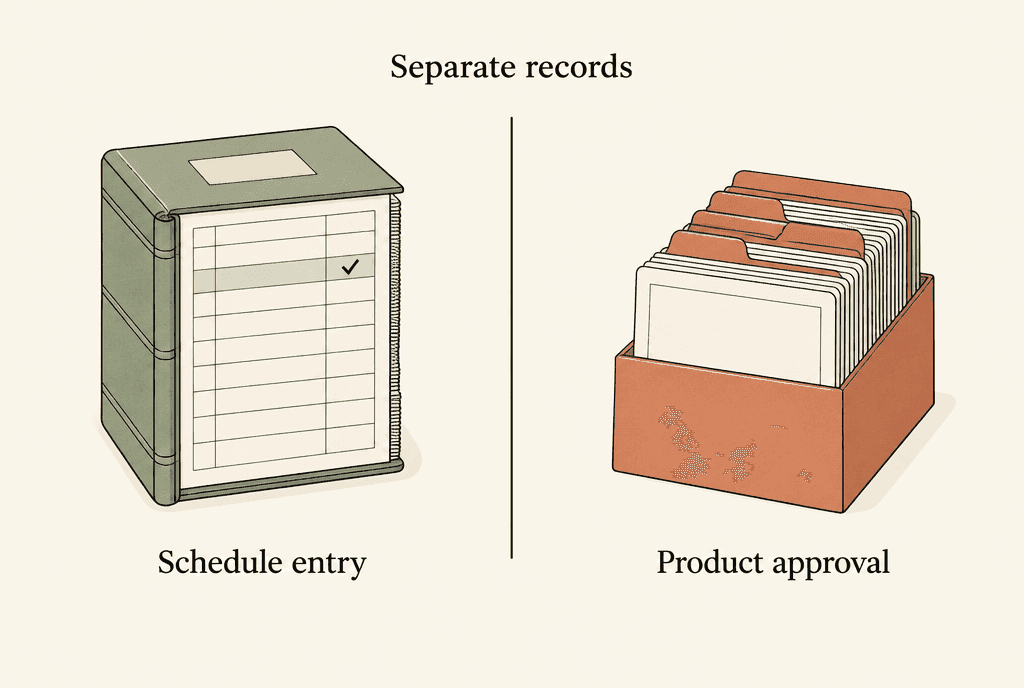
The October 2026 Poisons Standard (F2026L01327) names AOD-9604, CAS number 221231-10-3, in Schedule 4 and in clause 5 of Appendix D, as read on 16 October 2026. A schedule entry is not an approval. The WADA 2026 Prohibited List names AOD-9604 at S2.2.3, prohibited at all times. The TGA texts read do not name AOD-9604, and no approved ARTG product was confirmed. These are records, not legal advice.
01Poisons StandardContents
Three sets of rules can each say something different about one molecule. One set decides whether a product is approved. Another sets how a substance is controlled. A third sets what athletes may use. This page keeps those answers apart, and it belongs to the AOD-9604 reference hub.
Each record below shows the date it was read. What AOD-9604 is explains the peptide. The Australian peptide law guide puts these records in the wider picture.
Key facts
| Common name | AOD-9604 |
|---|---|
| CAS number | 221231-10-3 |
| Poisons Standard, October 2026 | Named in Schedule 4 and in Appendix D, clause 5 (F2026L01327, read 16 October 2026) |
| TGA | AOD-9604 not named in the advisory of 13 April 2026, the 7 May 2026 warning or the peptide products page (read 16 October 2026) |
| ARTG-registered product | Not confirmed; no exact product search result was verified for this page |
| WADA 2026 Prohibited List | Named at S2.2.3 as a growth hormone fragment; prohibited at all times; non-specified substance; in force from 1 January 2026 |
| FDA | Listed in the table of bulk drug substances nominated but withdrawn (FDA page, content current as of 22 April 2026) |
| Records checked | 16 October 2026 |
Is AOD-9604 listed in the Australian Poisons Standard?
Yes. The Poisons Standard is Australia's national list that sorts medicines and poisons into groups called schedules. Schedule 4 is the group for prescription-only medicines. The October 2026 version, F2026L01327, gives AOD-9604 its own Schedule 4 entry, as read on 16 October 2026. The entry carries the CAS number 221231-10-3. A CAS number is a unique code for one chemical substance, a bit like a barcode. The same document lists somatropin, which is human growth hormone, as a separate entry. So the two entries are distinct.
The full name of the document is the Therapeutic Goods (Poisons Standard—October 2026) Instrument 2026.
A Schedule 4 entry records how a substance is classed for supply. It does not mean a medicine containing the substance is approved. Approval is a separate decision, recorded on the Australian Register of Therapeutic Goods (ARTG). What Schedule 4 and Appendix D mean explains both terms.
What is Appendix D, and where does AOD-9604 appear in it?
Appendix D is a part of the Poisons Standard titled Additional controls on possession or supply of poisons included in Schedule 4 or 8. In plain terms, it adds extra controls for some Schedule 4 or 8 substances. It is split into clauses, and each clause has a table of poisons. AOD-9604 is item 3 in the table in clause 5. The same table names BPC-157 and CJC-1295, among other substances. What this means in a particular State or Territory is a legal question that this page does not answer. Read the wording of the clause in the document itself.
The Poisons Standard is a national list, and each State and Territory applies it through its own laws. The TGA says those laws may add more controls on the sale, supply and possession of unapproved peptide products. Read the document itself, and ask a lawyer about a specific situation.
Is AOD-9604 approved by the TGA?
No approved product containing AOD-9604 was confirmed for this page. The TGA texts read on 16 October 2026 do not name AOD-9604. They say unapproved peptide products have not been assessed by the TGA for safety, quality or effectiveness. They also say labels such as research use only do not make supply lawful, do not change a product's regulatory status, and do not permit importation. The ARTG, the national register of approved products, has its own search for named products. This page did not verify an exact product there. An unknown result is not proof that no product exists.
You can search the register on the TGA's ARTG page. A search there answers the question for one named product, while this page records published statements.
The TGA's 7 May 2026 warning adds that vials with poor or unclear labels will not be released under the Personal Importation Scheme. That warning does not name AOD-9604.
Is AOD-9604 banned in sport?
The World Anti-Doping Agency (WADA) keeps the list of substances banned in sport. Its 2026 Prohibited List names AOD-9604 at section S2.2.3, as an example of a growth hormone fragment. Everything in class S2 is prohibited at all times, both in and out of competition. The list marks all S2 substances as non-specified, a category term that the list itself defines. The same line names hGH 176-191 as a separate example. The list has been in force since 1 January 2026. Athletes should ask their anti-doping organisation about any substance. This page records the list and does not decide any athlete's status.
Labs can test for AOD-9604. A 2015 study built a urine test for the peptide and noted its prohibited status. A 2013 paper reported that AOD-9604 does not affect the WADA growth hormone isoform immunoassay, one of WADA's tests for growth hormone. Do peptides show up on drug tests explains the general picture.
What is the FDA status of AOD-9604?
The FDA is the US medicines regulator. One FDA page covers bulk drug substances that may present significant safety risks. It lists AOD-9604 in its table of substances nominated for compounding and then withdrawn by the people who nominated them. Compounding is when a pharmacy makes up a drug for a patient. The FDA says compounded drugs containing AOD-9604 may carry a significant immunogenicity risk, meaning an immune reaction, for certain ways of giving the drug. It also says it has found no, or only limited, safety information. A withdrawn nomination is not an approval. FDA records do not govern Australian law.
The FDA text sits here because people often read it beside the Australian records. A withdrawn nomination also does not put AOD-9604 on the FDA's list of substances that may be compounded. The side-effects page explains what the FDA safety wording does and does not say.
Evidence limits
What do these records not settle?
These records leave three things open. They do not say whether any particular product is on the ARTG. They do not say how a State or Territory law applies to a person. They do not say whether any use is lawful. What they do record is this: a Poisons Standard entry exists, the TGA texts read do not name AOD-9604, the WADA list names it, and the FDA lists it among withdrawn nominations. The Poisons Standard is updated regularly. This page records the October 2026 version as read on 16 October 2026. Check the current version and ask a lawyer before acting on any entry.
Legal status also says nothing about whether the peptide works or is safe. The human evidence is in the study findings, and the safety record is on the side-effects page. Both are thin.
Comparison
What each official record says about AOD-9604, and the question it answers. Records read on 16 October 2026. The table records sources and is not legal advice.
| Record | Question it answers | What it says about AOD-9604 |
|---|---|---|
| Poisons Standard, October 2026 (F2026L01327) | How a substance is classed for supply in Australia | Its own Schedule 4 entry, CAS number 221231-10-3; item 3 in the table in Appendix D, clause 5 |
| TGA advisory, warning and peptide products page | Whether products are approved, and what applies to unapproved peptide products | Does not name AOD-9604; no approved ARTG product was confirmed for this page |
| WADA 2026 Prohibited List | What athletes may use | Named at S2.2.3 as a growth hormone fragment; prohibited at all times |
| FDA compounding page, 22 April 2026 | US compounding status and safety risk | Nominated for compounding, then withdrawn; possible immunogenicity risk |
FAQ
Is AOD-9604 a Schedule 4 substance in Australia?
Yes. AOD-9604 has its own entry in Schedule 4 of the October 2026 Poisons Standard, read on 16 October 2026. That schedule covers prescription-only medicines, and an entry is not an approval.
Is AOD-9604 on the ARTG?
A registered product was not confirmed for this page. The register can be searched on the TGA website, and an unknown result is not proof that no product is registered.
Is AOD-9604 allowed for athletes?
AOD-9604 sits in class S2 of the WADA 2026 list, which applies in and out of competition, and S2 substances are non-specified. A question about a particular athlete goes to that athlete's anti-doping organisation.
Does the TGA say anything about AOD-9604 by name?
No. The three TGA texts read on 16 October 2026 do not name AOD-9604: the advisory of 13 April 2026, the warning of 7 May 2026 and the peptide products page. They apply to unapproved peptide products as a group.
More in this hub
- AOD-9604 side effects: what trials, the FDA and regulators have recorded
- AOD-9604 study findings: what the human obesity trial reported and what animal studies measured
- How does AOD-9604 work? What rat and mouse studies measured
- What is AOD-9604? The growth hormone fragment peptide explained from the research
Citations
2 sourcesCox HD, Smeal SJ, Hughes CM, Cox JE, Eichner D. Drug Testing and Analysis. 2015;7(1):31-38.
doi:10.1002/dta.1715Orlovius AK, Thomas A, Schänzer W, Thevis M. Drug Testing and Analysis. 2013;5(11-12):850-852.
doi:10.1002/dta.1557
Form Laboratories supplies research-use-only reference material. This article is an educational summary of published third-party literature. It is not medical advice, not a use instruction, and research material is not for human or animal use.