
Compound hub · Retatrutide
Retatrutide and type 2 diabetes: what the trials measured
Retatrutide trials in type 2 diabetes measure HbA1c: average blood sugar over about three months (NIDDK). They track weight and unwanted effects too (Rosenstock et al., The Lancet, 2023). The Phase 2 and published TRANSCEND-T2D-1 papers cover specific study groups. A blood test change or study listing cannot show lasting health outcomes for everyone (Bajaj et al., The Lancet, 2026).
A meal changes the sugar in your blood. But a blood test can look further back than lunch. Some tests show one moment. HbA1c gives a longer view. Keep that in mind when you read a diabetes headline. A lower reading and a change on the scales answer different questions. Fewer health problems are a separate question too. This page in the retatrutide hub explains the measure behind the headline.
Your body does not divide its work into neat research boxes. Blood sugar, body weight and the heart all connect. A trial still needs a clear question and a fair comparison. Reading those choices first makes the paper easier to follow.
Key facts
| Research compound | Retatrutide; LY3437943 |
|---|---|
| Phase 2 record | NCT04867785; Rosenstock et al., The Lancet, 2023 |
| TRANSCEND-T2D-1 record | NCT06354660; Bajaj et al., The Lancet, 2026 |
| TRANSCEND-T2D-2 record | NCT06260722; ClinicalTrials.gov |
| TRANSCEND-T2D-3 record | NCT06297603; ClinicalTrials.gov |
| Blood test reference | NIDDK: The A1C Test & Diabetes |
| Registry check | 17 October 2026; sponsor-submitted records on ClinicalTrials.gov |
Which Phase 2 trial studied retatrutide in type 2 diabetes?
Rosenstock and colleagues reported the retatrutide diabetes trial in The Lancet in 2023. Phase 2 means the second stage of human trials. The paper and ClinicalTrials.gov record NCT04867785 describe 281 adults. They were put into groups by chance. The comparison groups received placebo or dulaglutide. Placebo has no active treatment; dulaglutide is an active medicine. The study was double-blind: people taking part and researchers did not know each person's group. The main question was HbA1c change from the starting reading to week 24. The study record also lists later blood sugar and weight measures. These choices set the question before you read the findings.
The diabetes study and the linked obesity paper are separate. See Retatrutide Phase 2 trial: what did the paper find?. The same compound name does not mean the same groups or questions. The journal and study record number tell them apart.
What is HbA1c, and why do diabetes trials measure it?
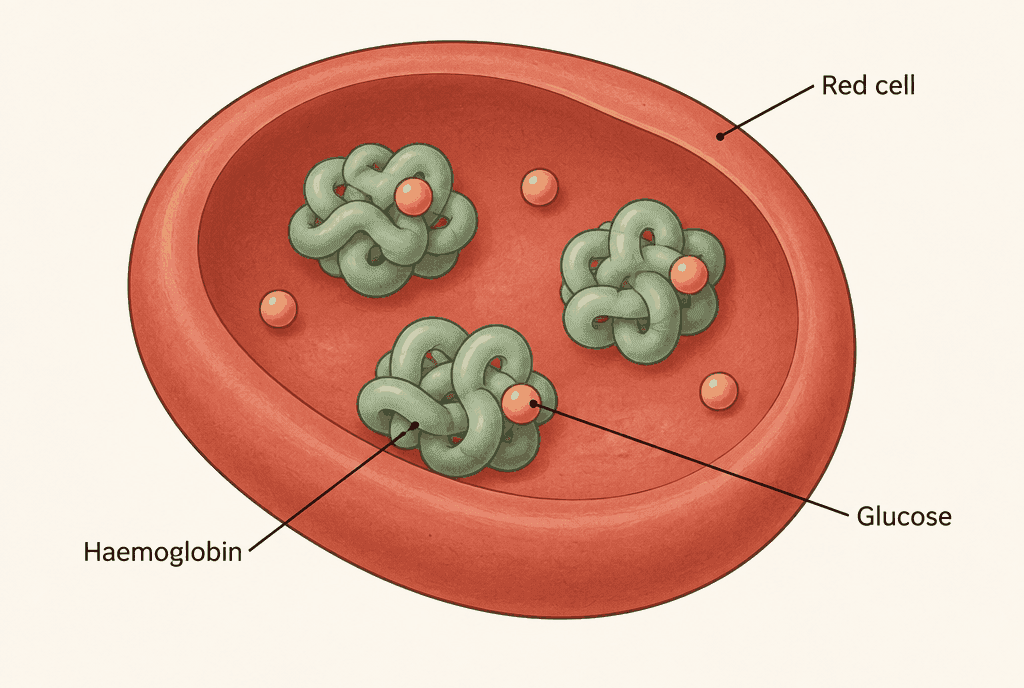
HbA1c measures the share of haemoglobin with glucose attached, says NIDDK. NIDDK stands for the National Institute of Diabetes and Digestive and Kidney Diseases. Haemoglobin is the protein that carries oxygen inside red blood cells. Glucose is blood sugar. The reading shows average blood sugar over about three months. It does not just reflect one meal. The result is a percentage, or a share out of 100. You can use it to compare blood sugar over time. But an average can hide short rises and falls. Some health conditions can make the test less accurate, NIDDK notes.
Subtract one percentage from another to find a change in percentage points. HbA1c changes use this measure. Body weight change uses a different sum. Keep the units beside each result. Then you can tell a blood sugar figure from a weight figure.
What else did the Phase 2 diabetes trial measure?
The Phase 2 diabetes trial also tracked later HbA1c readings, weight and unwanted effects. These were extra measures alongside its main blood sugar result. ClinicalTrials.gov record NCT04867785 lists HbA1c and weight measures through week 36. Rosenstock and colleagues reported blood sugar and weight changes (The Lancet, 2023). They also reported gut symptoms, such as nausea and diarrhoea. These findings need separate labels. Weight cannot stand in for a blood sugar test. Neither measure records every part of safety. The comparison group, time point and people whose results were counted all shape the finding.
The main measure is called the primary endpoint. Other planned measures are secondary endpoints. A later reading should not quietly replace the main question. See Retatrutide study findings: what do the clinical trials show?. That guide puts the diabetes paper beside other trial records.
What are the Phase 3 TRANSCEND-T2D trials testing?
The TRANSCEND-T2D trials study retatrutide in different groups of adults with type 2 diabetes. Phase 3 is a later stage of human trials. ClinicalTrials.gov describes TRANSCEND-T2D-1 as a comparison with placebo. Diet and exercise alone had not kept these people's blood sugar under enough control. TRANSCEND-T2D-2 compares retatrutide with semaglutide alongside other medicines. It is open-label: people know their assigned treatment. TRANSCEND-T2D-3 compares retatrutide with placebo in people whose kidneys work less well. They also receive insulin treatment. These are separate questions. One group's finding does not answer another group's question (ClinicalTrials.gov, checked 17 October 2026).
NCT06260722 names metformin, with or without an SGLT2 inhibitor. This type of medicine makes more blood sugar leave through urine. NCT06297603 includes people whose kidneys work moderately or severely less well. These entry rules matter when you compare papers. For the separate tirzepatide studies, see What are the SURPASS and SURMOUNT trials?.
Has TRANSCEND-T2D-1 published results?
Yes. Bajaj and colleagues published TRANSCEND-T2D-1 in The Lancet, checked 17 October 2026. The paper reports 537 adults put into retatrutide or placebo groups by chance. The main measure was HbA1c change at week 40. A key extra measure was percentage weight change (Bajaj et al., 2026). The paper also reports unwanted effects. It records people who stopped treatment because of those effects. The authors say the study is complete. These results describe what was measured in that trial's group. They cannot predict outcomes for every person with diabetes.
ClinicalTrials.gov lists NCT06354660 as completed, checked 17 October 2026. But it has no results table posted. That part of the study record does not mean no paper exists. The published abstract, or short paper summary, is a separate record. This page uses that summary. It does not show the full safety tables.
What did the June 2026 diabetes briefing report?
The June briefing described a named retatrutide trial, not every new diabetes headline. The American Diabetes Association reported TRANSCEND-T2D-1 on 6 June 2026. It followed 537 adults with recently diagnosed type 2 diabetes for 40 weeks. The briefing reports a 16.8% average weight fall at the upper end of its results. This was a comparison with placebo, which has no active drug.
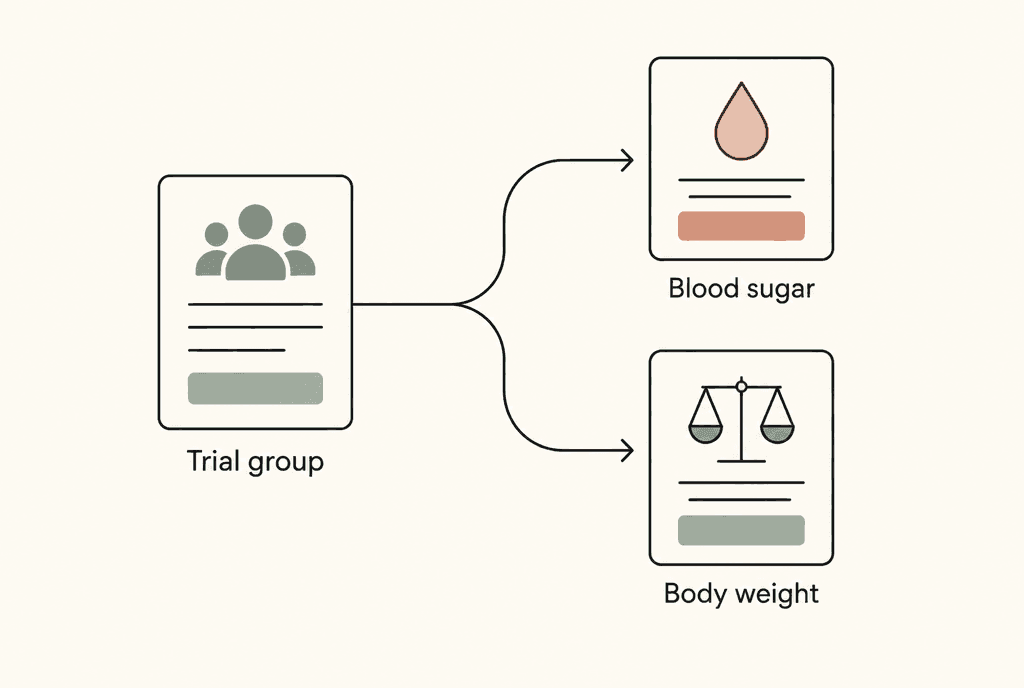
The ADA briefing also reports a fall in A1C, a measure of average blood sugar. Blood sugar and weight are separate measures. Neither tells us every long-term health outcome.
The same release said a comparison with semaglutide was still underway then. That was a separate trial, TRANSCEND-T2D-2. These statements describe the June announcement, checked 17 October 2026. News about other drugs or cell studies needs its own source. It should not become part of this trial's result.
Evidence limits
What do these diabetes trials not show?
These retatrutide diabetes records do not show that HbA1c change alone prevents heart attacks, kidney failure or early death. Those outcomes need direct evidence. Studying people whose kidneys work less well does not prove kidney protection from the title alone. NCT06297603 names HbA1c as its main measure. NCT06260722 asks a separate comparison question (ClinicalTrials.gov, checked 17 October 2026). A listed study plan shows what researchers intend to measure. A published finding shows what the study found. Keep those records separate. A trial name should not become a health promise.
Trial findings cover the study treatment and people checked for entry. They cannot show the identity, quality or effects of a separate research material. Eli Lilly funded the Rosenstock and Bajaj studies, as both papers state. See What is replacing tirzepatide?. It explains why a research programme does not show a replacement for someone's medicine.
This educational record from Form Laboratories explains published research. It does not select treatment or give personal medical advice.
Comparison
Study question, primary HbA1c time point and registry status. All registry fields were checked 17 October 2026 on ClinicalTrials.gov. Status describes the study record, not medicine approval or a result.
| Study and source | Comparison | Main HbA1c reading | Registry status |
|---|---|---|---|
| Phase 2; NCT04867785 | Retatrutide, placebo and dulaglutide | Change from baseline at week 24 | Completed; results posted |
| TRANSCEND-T2D-1; NCT06354660 | Retatrutide and placebo; double-blind | Change from baseline at week 40 | Completed; no registry results table; paper by Bajaj et al., The Lancet, 2026 |
| TRANSCEND-T2D-2; NCT06260722 | Retatrutide and semaglutide; open-label | Change from baseline at week 80 | Active, not recruiting; no results posted |
| TRANSCEND-T2D-3; NCT06297603 | Retatrutide and placebo; double-blind | Change from baseline at week 52 | Active, not recruiting; no results posted |
FAQ
Was the 2023 diabetes trial the NEJM obesity trial?
No. Rosenstock and colleagues published the diabetes trial in The Lancet. The linked NEJM guide discusses a separate obesity study. The diabetes record is NCT04867785.
Does HbA1c show blood sugar at one moment?
No. NIDDK explains that HbA1c reflects average blood sugar over about three months. One blood sugar reading and an HbA1c result answer different questions. Neither test alone describes every change through the day.
Is TRANSCEND-T2D-2 a comparison with another medicine?
Yes. ClinicalTrials.gov record NCT06260722 describes an open-label comparison with semaglutide. This means people know their assigned treatment. The record was active, not recruiting, when checked 17 October 2026. No results were posted. The plan alone does not show which study treatment worked better.
Does a completed registry record mean results are posted?
No. Study status and posted results are separate parts of the record. NCT06354660 was completed when checked 17 October 2026. It had no results table in the study record. But Bajaj and colleagues had published its findings in The Lancet in 2026.
Does an HbA1c result prove lasting health outcomes?
No. An HbA1c result describes blood sugar. It does not directly count heart attacks or other later health events. Each claimed outcome needs its own evidence. A planned blood sugar measure cannot answer every question about long-term health.
More in this hub
- Retatrutide vs Mounjaro vs Ozempic: what's the difference?
- What is the difference between GLP-1 and GLP-3?
- Is retatrutide available in the USA? What the public record says
- How much does retatrutide cost? Is there an approved price?
- What does retatrutide do in the body? The three receptors in the papers
- How are people getting retatrutide? Trials, approval and research supply
- Who should not take retatrutide? What the trial exclusion lists say
- What makes a peptide company reputable? How to check a supplier's testing
- What is replacing tirzepatide? Weight-loss medicines in Phase 3 in 2026
- How long has retatrutide been studied?
- Retatrutide pharmacokinetics: what is the half-life?
- Retatrutide Phase 2 trial: what did the paper find?
- What is the molecular formula of retatrutide?
- NCT05882045: what is the TRIUMPH-3 retatrutide trial?
- NCT05929066: what is the TRIUMPH-1 retatrutide trial?
- Where does tirzepatide come from? Lilly's LY3298176
- SURPASS and SURMOUNT: what the tirzepatide trials measured
- Retatrutide in Australia: is it legal, approved or available yet?
- Retatrutide study findings: what do the clinical trials show?
- Retatrutide side effects: what trials and regulators have recorded
Citations
2 sourcesRosenstock J, Frias J, Jastreboff AM, et al. The Lancet. 2023;402(10401):529–544; Phase 2 diabetes trial.
doi:10.1016/S0140-6736(23)01053-XBajaj HS, Welch M, Shah P, et al. The Lancet. 2026;407(10546):2402–2413; TRANSCEND-T2D-1; abstract read 17 October 2026.
doi:10.1016/S0140-6736(26)00967-0
Form Laboratories supplies research-use-only reference material. This article is an educational summary of published third-party literature. It is not medical advice, not a use instruction, and research material is not for human or animal use.