
Compound hub · Retatrutide
Who should not take retatrutide? What the trial exclusion lists say
Retatrutide trial lists tell you who could not join a study. They cannot tell you who should take retatrutide. The Phase 2 obesity study was in the second stage of testing. Its records and TRIUMPH records were checked 17 October 2026. They list past pancreatitis, which means inflammation of the pancreas. Some thyroid cancer histories also ruled people out. The rules differ between studies. They do not show what is safe for you.
01What exclusion meansContents
Your health history is more than a list of illnesses. A past illness can change which question a study can ask. So can a recent weight change or an operation. Entry rules set these limits before researchers compare the results. The retatrutide hub brings the trial records and their limits together.
A short list can look like a simple yes-or-no test. Here, it shows who was in the study group. This page from Form Laboratories explains some published rules about who could not join. These rules are not advice for you.
Key facts
| Earlier obesity study | Phase 2; NCT04881760 (Jastreboff et al., NEJM, 2023) |
|---|---|
| TRIUMPH-1 record | NCT05929066; ClinicalTrials.gov, checked 17 October 2026 |
| TRIUMPH-3 record | NCT05882045; ClinicalTrials.gov, checked 17 October 2026 |
| Record field compared | Eligibility Criteria |
What does a trial exclusion criterion mean?
An exclusion criterion is a rule that keeps someone out of a trial. An inclusion criterion says what you need to join. These rules set the group researchers plan to study. The ClinicalTrials.gov records here show why this matters. TRIUMPH-3 required established cardiovascular disease: disease of the heart or blood vessels. Yet some recent heart and stroke events ruled people out. A rule can narrow the question a study asks. It does not prove retatrutide harmed people who were left out. The entry list shows who was chosen. Trial results show what happened after that.
The table below covers some rules, not every requirement. TRIUMPH-1 also has separate rules for its knee and sleep study groups. The source is ClinicalTrials.gov NCT05929066, checked 17 October 2026. These extra rules are another reason a short summary cannot tell you who can join.
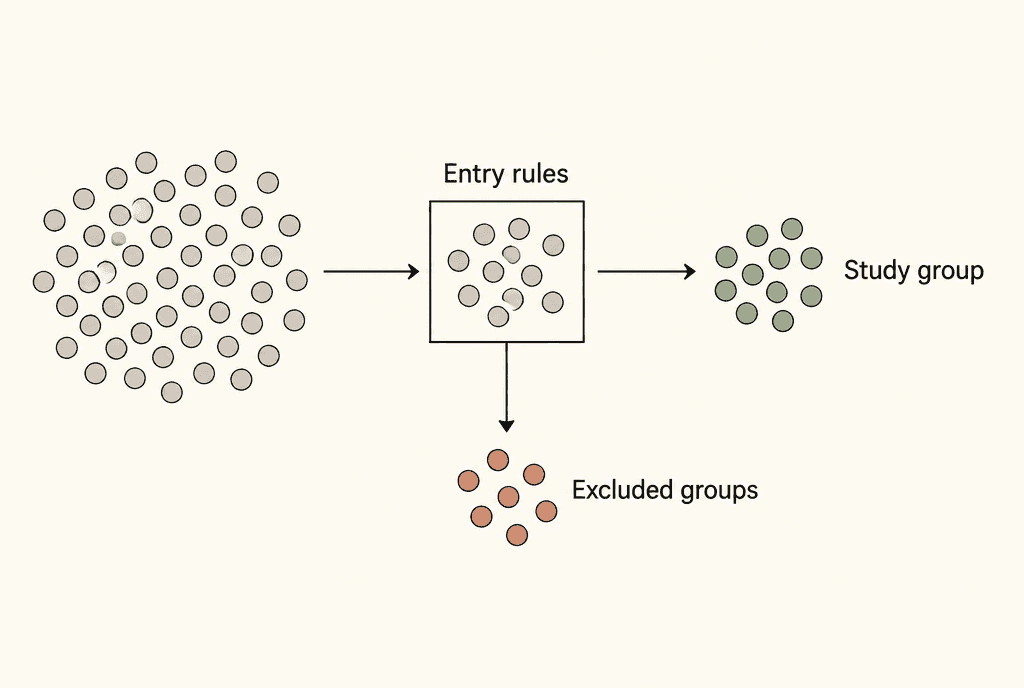
Who was excluded from the Phase 2 obesity trial?
People with type 1 or type 2 diabetes could not join the retatrutide Phase 2 obesity trial. ClinicalTrials.gov NCT04881760 lists this rule. Past pancreatitis and some thyroid cancer histories also ruled people out. Pancreatitis means inflammation of the pancreas. Other rules covered past or planned obesity surgery and medicines that affect body weight. A recent weight change beyond the study's limit also ruled people out. So did pregnancy, breastfeeding and plans for pregnancy. These are examples from the record checked 17 October 2026. They describe this obesity study, not every retatrutide study.
Jastreboff and colleagues published the study in the New England Journal of Medicine in 2023. Their supplementary appendix, an extra document with the paper, gives more detail on entry rules. These include pregnancy tests and rules on breastfeeding. Read more in Retatrutide study findings: what do the clinical trials show?.
Did TRIUMPH-1 and TRIUMPH-3 exclude the same groups?
No. TRIUMPH-1 and TRIUMPH-3 share some rules, but their lists differ. ClinicalTrials.gov NCT05929066 lists diabetes as a reason people could not join TRIUMPH-1. NCT05882045 names type 1 diabetes for TRIUMPH-3. That study required established heart or blood vessel disease. Both list past pancreatitis. Both also list medullary thyroid carcinoma, a specific thyroid cancer. They name multiple endocrine neoplasia type 2 too. This condition is linked to tumours in glands that make hormones. A past or family history of either condition ruled people out. Both studies also limit recent weight changes and past or planned obesity surgery. These selected entries were checked 17 October 2026. They are not the full list of checks.
Each study asks a different question. Read NCT05929066: what is the TRIUMPH-1 retatrutide trial? for the first study. The other page asks NCT05882045: what is the TRIUMPH-3 retatrutide trial?. A rule that keeps people out of one trial need not apply to all trials.
Does meeting the entry rules mean retatrutide is safe?
No. Meeting a retatrutide trial's entry rules does not show it is safe. Entry rules say who can be studied. Safety findings show what happened during the research. Jastreboff and colleagues reported unwanted effects in people who had passed the entry checks. Their Phase 2 paper appeared in the New England Journal of Medicine. Passing those checks did not mean no harm could occur. Leaving a group out creates a different gap. That study cannot directly show what would happen in that group. Being inside or outside the study does not answer what is safe for you.
Another page asks What side effects have retatrutide trials and regulators recorded? It covers events seen in the research. This page covers who was chosen. Keeping these questions apart avoids confusing an entry rule with a safety finding.
Evidence limits
What cannot be concluded from these exclusion lists?
These lists cannot tell you whether retatrutide suits you or how you would respond. They cannot fill gaps in results for groups left out. The records here do not explain the reason for every rule. A shared rule does not prove a shared cause of harm. Different lists do not prove one study group is safer than another. An entry list only sets the rules for joining that study. The Phase 2 rules on pregnancy and breastfeeding are examples. They say who could join. They are not findings about what happened during pregnancy or breastfeeding.
This summary uses the named study records checked 17 October 2026 and the cited paper's appendix. It does not cover every retatrutide study or every entry rule. Research material is not a medicine and is not for human or animal use. This comparison does not give you personal advice.
Comparison
Some published entry rules, not a full check of who can join. Study records checked 17 October 2026. Each row applies only to the named study.
| Study and primary record | Diabetes exclusion | Other selected exclusions |
|---|---|---|
| Phase 2 obesity study: NCT04881760; Jastreboff et al., NEJM, 2023, Supplementary Appendix | Type 1 or type 2 diabetes | Past pancreatitis; pregnancy or breastfeeding; prior or planned obesity surgery |
| TRIUMPH-1: [ClinicalTrials.gov NCT05929066](https://clinicaltrials.gov/study/NCT05929066) | Diabetes mellitus | Past pancreatitis; specified thyroid cancer or endocrine tumour syndrome history; prior or planned obesity surgery |
| TRIUMPH-3: [ClinicalTrials.gov NCT05882045](https://clinicaltrials.gov/study/NCT05882045) | Type 1 diabetes | Past pancreatitis; specified thyroid cancer or endocrine tumour syndrome history; certain recent heart or stroke events |
FAQ
Is a trial exclusion list personal medical advice?
No. A trial's list sets out who it can study. The records here do not assess you or say who should take retatrutide.
Did the obesity trial include pregnant or breastfeeding participants?
No. Pregnancy and breastfeeding ruled people out of the Phase 2 obesity trial. The study record is NCT04881760, checked 17 October 2026. The authors' appendix also describes pregnancy checks and rules on breastfeeding. Those rules give no results for either group.
Was every form of diabetes excluded from TRIUMPH-3?
The TRIUMPH-3 list names type 1 diabetes. The study record is NCT05882045, checked 17 October 2026. TRIUMPH-1 has a broader rule on diabetes. This one difference cannot tell you whether someone meets all the entry rules.
Does a thyroid cancer exclusion refer to all thyroid conditions?
The TRIUMPH entries name specific conditions, not all thyroid conditions. They name histories of medullary thyroid carcinoma and multiple endocrine neoplasia type 2. The records are NCT05929066 and NCT05882045, checked 17 October 2026. These names cannot show what is safe for other thyroid conditions.
Does exclusion prove that retatrutide harmed that group?
No. An exclusion is a rule about who can join. It is not an event seen in a study. Showing harm needs evidence of what happened. The entry list only says who was left out of the study group.
More in this hub
- Retatrutide vs Mounjaro vs Ozempic: what's the difference?
- What is the difference between GLP-1 and GLP-3?
- Is retatrutide available in the USA? What the public record says
- How much does retatrutide cost? Is there an approved price?
- What does retatrutide do in the body? The three receptors in the papers
- How are people getting retatrutide? Trials, approval and research supply
- What makes a peptide company reputable? How to check a supplier's testing
- What is replacing tirzepatide? Weight-loss medicines in Phase 3 in 2026
- Retatrutide and type 2 diabetes: what the trials measured
- How long has retatrutide been studied?
- Retatrutide pharmacokinetics: what is the half-life?
- Retatrutide Phase 2 trial: what did the paper find?
- What is the molecular formula of retatrutide?
- NCT05882045: what is the TRIUMPH-3 retatrutide trial?
- NCT05929066: what is the TRIUMPH-1 retatrutide trial?
- Where does tirzepatide come from? Lilly's LY3298176
- SURPASS and SURMOUNT: what the tirzepatide trials measured
- Retatrutide in Australia: is it legal, approved or available yet?
- Retatrutide study findings: what do the clinical trials show?
- Retatrutide side effects: what trials and regulators have recorded
Citations
1 sourcesJastreboff AM, Kaplan LM, Frías JP, et al. New England Journal of Medicine. 2023;389:514–526; Supplementary Appendix, inclusion and exclusion criteria.
doi:10.1056/NEJMoa2301972
Form Laboratories supplies research-use-only reference material. This article is an educational summary of published third-party literature. It is not medical advice, not a use instruction, and research material is not for human or animal use.