
Hub · Peptide Science
Is SLU-PP-332 a peptide, and what harm record exists?
SLU-PP-332 is a small molecule, rather than a peptide chain. PubChem records its structure under CID 5338394. The cited Billon paper reports cell tests and mouse experiments. Its harm checks do not establish safety in people. A ClinicalTrials.gov name search found no matching study, checked 17 October 2026. The sources reviewed here contain no human side-effect record for SLU-PP-332.
01Chemical identityContents
A search result can put a chemical in the wrong box. The phrase SLU peptides makes SLU-PP-332 sound like an amino-acid chain. Yet its structure tells a different story. Start with what the molecule is, then ask what was tested. The peptide science hub explains why those questions belong together.
This guide from Form Laboratories follows the chemistry record and original study. It keeps mouse findings beside their limits. What are peptides? explains amino acids, the building blocks of peptide chains. SLU-PP-332 does not have that kind of chain.
Key facts
| Molecule type | Small molecule; no peptide chain in the recorded structure (PubChem CID 5338394; checked 17 October 2026) |
|---|---|
| Formula | C18H14N2O2 (PubChem CID 5338394; checked 17 October 2026) |
| Original paper | Cell tests and mouse experiments (Billon et al., ACS Chemical Biology, 2023) |
| Harm observation | No obvious toxic effects reported in the ten-day mouse experiment (Billon et al., 2023) |
| Human trial search | No matching ClinicalTrials.gov study for SLU-PP-332; checked 17 October 2026. A name search can miss other names. |
Why is SLU-PP-332 not a peptide?
SLU-PP-332 has a different structure from a peptide chain. A peptide contains amino acids joined together in a chain. PubChem's SLU-PP-332 record shows a small chemical with linked ring shapes. Its formula is C18H14N2O2, checked 17 October 2026. That formula lists the atoms in the molecule. The recorded structure, rather than a label on a page, shows its build.
The PubChem chemistry record gives the structure and formula together. The original Billon paper also shows the chemical structure in its first figure. A shared place in search results does not make two chemicals alike. Peptide findings therefore cannot stand in for SLU-PP-332 findings.
A chemistry record answers which molecule a name describes. It does not confirm the contents of a separate sample. It also cannot tell whether that molecule is safe for people. Identity and harm need different evidence.
What did the original SLU-PP-332 study test?
Billon and colleagues tested SLU-PP-332 in cells and mice. Their paper appeared in ACS Chemical Biology in 2023. It examined cell signals, muscle changes and mouse running tests. The team studied estrogen-related receptors, called ERRs. These proteins help control which genes a cell reads. The paper reports no trial in people and no human side-effect results.
The original SLU-PP-332 paper is a lab and animal study. A cell test examines selected changes under controlled conditions. A mouse experiment adds a whole animal, but still leaves a gap to people. Neither study type supplies a human harm record.
The paper's exercise language describes the research question and mouse measures. It does not establish the same effects in people. A result about mouse running also cannot answer a separate question about lasting harm.
What harm checks did the mouse paper report?
Billon and colleagues reported no obvious toxic effects during a ten-day mouse experiment. They also reported normal blood counts and blood salt levels. Creatine kinase showed no significant change in the blood. This protein is a marker used to check for muscle injury. Those findings describe the checks reported in that experiment. They do not establish a full safety record.
No obvious toxic effects means no clear signs of poisoning were reported in those mice. It does not mean every possible harm was tested. A blood marker also answers a narrower question than a whole safety study. The paper links its blood results to its own study conditions.
The distinction matters when a summary shortens the finding to no side effects. That phrase removes the animal model and the time limit. Keeping both details makes the finding easier to judge without overstating it.
Is there a human trial record for SLU-PP-332?
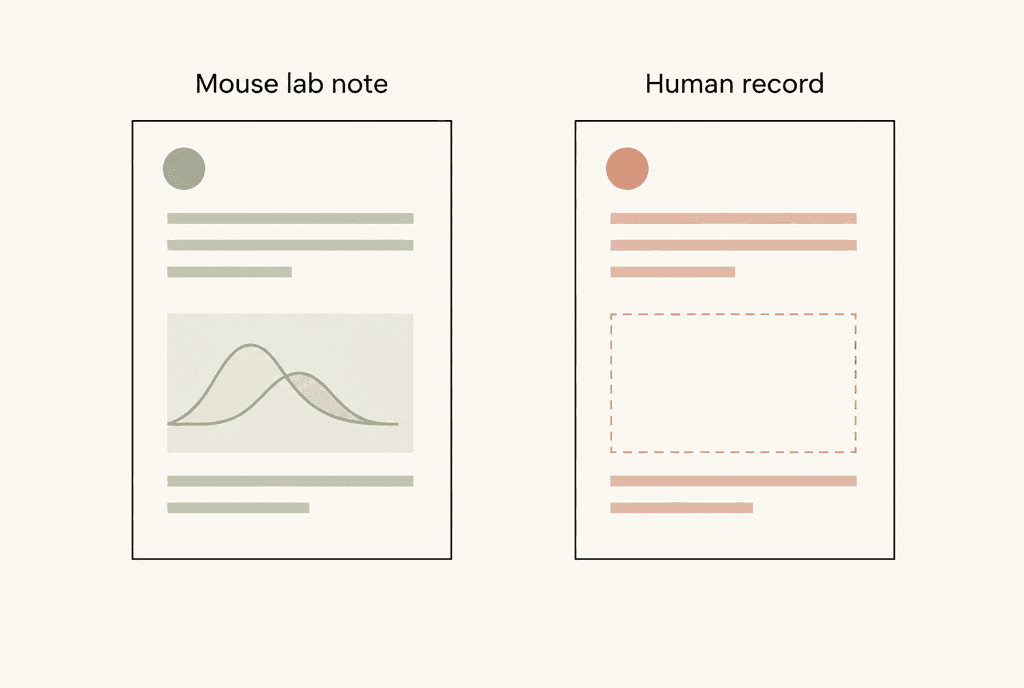
A ClinicalTrials.gov search for SLU-PP-332 returned no matching study, checked 17 October 2026. This is a dated result from a named registry. It is not proof that every possible record was searched. A study might appear under another name or in another registry. The Billon paper supplies no human trial results to fill that gap.
The ClinicalTrials.gov name search can be checked again as records change. This page used the same name in the registry's public data search. No matching record was returned. The check covers that name and registry on the date shown.
Without a human study, this record cannot supply rates of side effects in people. It cannot show which groups face more risk. Online accounts do not provide the missing trial evidence. Do peptides have side effects? explains why harm records must name the compound studied.
Evidence limits
What does this SLU-PP-332 record leave unknown?
The sources reviewed here do not establish human safety for SLU-PP-332. They do not give human side-effect rates or lasting health outcomes. The PubChem entry describes a chemical structure, while Billon and colleagues describe cell and mouse findings. Neither provides a human harm study. Research material is not a medicine. It is not for human or animal use.
The clearest reading keeps each record beside the question it answers. Chemistry can establish the recorded structure. Mouse blood tests can describe the measured changes in those mice. A registry search can show what one search found. Missing human evidence remains a gap, even when a mouse finding sounds reassuring.
This guide reviews the named records, checked 17 October 2026. It is not a review of every possible SLU-PP-332 paper. It does not assess a product or a batch. The absence of a human harm record cannot establish the absence of human harm.
Comparison
Each record answers a different question. Sources and limits stay beside the fact. Records checked 17 October 2026.
| Record | What it shows | What it cannot establish | Source |
|---|---|---|---|
| Chemistry entry | Small molecule structure; formula C18H14N2O2 | Human safety or a separate sample's contents | PubChem CID 5338394; checked 17 October 2026 |
| Mouse harm checks | No obvious toxic effects in the ten-day experiment; no significant creatine kinase change | Human side-effect rates or lasting safety | Billon et al., ACS Chemical Biology, 2023 |
| Trial name search | No matching study returned for SLU-PP-332 | Absence from every registry or under every name | ClinicalTrials.gov; checked 17 October 2026 |
FAQ
Is SLU-PP-332 a peptide?
No. PubChem records a small molecule under CID 5338394, checked 17 October 2026. Its structure is not an amino-acid chain. Calling it a peptide does not change that structure.
What side effects are recorded for SLU-PP-332?
The sources reviewed here contain no human side-effect record, checked 17 October 2026. Billon and colleagues reported no obvious toxic effects in their ten-day mouse experiment. That narrow observation cannot establish which side effects people might experience.
Does the mouse study show SLU-PP-332 is safe?
It does not establish human safety. The 2023 paper reports specific checks in mice under its study conditions. Those checks cannot settle lasting harm or harm in people.
What does the creatine kinase result mean?
Creatine kinase is a protein used as a blood marker of muscle injury. Billon and colleagues found no significant blood change in their mouse experiment. That result concerns one marker in that experiment. It does not rule out every kind of harm.
Were any matching human trials found?
The ClinicalTrials.gov search returned no matching study for SLU-PP-332, checked 17 October 2026. Other names and registries were outside that search. A missing match cannot prove that no record exists anywhere.
More in this hub
- What is SS-31, and did its trial measure weight loss?
- Which peptides are approved in Australia and by the FDA?
- What are peptides? Meaning, medicines, safety and legal status in Australia
- What is a peptide bond? Peptide structure, chemistry and synthetic peptides explained
- Citrullinated peptide antibodies: what anti-CCP is, why the test peptide is cyclic and how it is pronounced
- Peptide vs protein: what is the difference? Peptides compared with proteins, hormones, collagen and approved medicines
- What do peptides do? What published studies found
- Peptide side effects: what studies and regulators have recorded
- Do peptides show up on drug tests? How peptides are tested and labelled
- What have collagen peptide studies measured about muscle?
- What is a signal peptide, and how does it direct a protein?
- What is carnosine, and what do studies measure?
- What is CGRP, and how does its signalling work?
- What is icotrokinra, and what do receptor studies measure?
- What is irisin, and how is it studied?
- What is lunasin, and what have studies measured?
- What is pramlintide, and how does amylin signalling work?
- What is peptide YY, and what do studies measure?
- What does TAT-DATNT refer to in peptide research?
Citations
1 sourcesBillon C, Sitaula S, Banerjee S, et al. ACS Chemical Biology. 2023;18(4):756–771. Cell and mouse experiments; published online 29 March 2023..
doi:10.1021/acschembio.2c00720
Continue
Explore peptide scienceForm Laboratories supplies research-use-only reference material. This article is an educational summary of published third-party literature. It is not medical advice, not a use instruction, and research material is not for human or animal use.